Thursday, August 03, 2006

6 Cardinal Colors: Green


Booker T. and the MGs, Green Onions (live).
Larry Clinton, A Study in Green.
Can, I'm So Green.
Hildegard von Bingen, O Viridissima Virga.
Vera Lynn, How Green Was My Valley.
R.E.M., Green Grow the Rushes.
Louis Jordan, The Green Grass Grows All Around.
Rosemary Clooney, Mountain Greenery.
Bill Haley and the Comets, Green Tree Boogie.
New Order, Everything's Gone Green.
The Housemartins, The Light Is Always Green.
Porter Wagoner, Green, Green Grass of Home.
Creedence Clearwater Revival, Green River.
The Kinks, Village Green.
Sybille Baier, Colour Green.
Jim Lowe, Green Door.
Esquerita, Green Door.
Elvis Costello, Green Shirt.
Husker Du, Green Eyes.
Sugarloaf, Green-Eyed Lady.
Weems String Band, Greenback Dollar.
Ray Charles, Greenbacks.
John Coltrane, Greensleeves.


The dawn was apple-green,
The sky was green wine held up in the sun,
The moon was a golden petal between.

D.H. Lawrence, Green.

Green is the shade of life--it is nature's favored color, so much that nature, unchecked, would clothe the whole of the world in green, from emerald crabgrass to pine-tinged mountains. Green is excess, fecundity, spirit--it teems, it grows. It can seem too profuse, too unruly a color, especially to the more ascetic types--Piet Mondrian, for instance, came to violently hate green, exiling it from his later paintings, and even refusing to look out windows for fear of being "unexpectedly overwhelmed by Mother Nature's green" (Herman Pleij); Kandinsky believed green's ubiquity and general pleasantness marked it as the staid color of the bourgeoisie, and green is scarce in heraldry, indicating some elite families thought the same.


Green is insperable from the act of growth--the English word 'green' (and the German 'grun') is ultimately derived from the Old English growan, 'to grow'. It is the first color mentioned in the Peshitta Bible (compare and contrast Genesis here). The Peshitta Genesis 1:11: "And God said let the earth bring forth green plants." The Hebrew Bible introduces green a bit later, in Genesis 30, in which God gives the animals "all the green plants" to eat.

It is a zesty, deep color. Because of its unchecked supremacy in nature, it still surprises to realize green is only a secondary color, in which yellow's heart is ennobled by blue's grace. (Though green is one of the primary colors of television and computer monitors, having supplanted its parent yellow.)
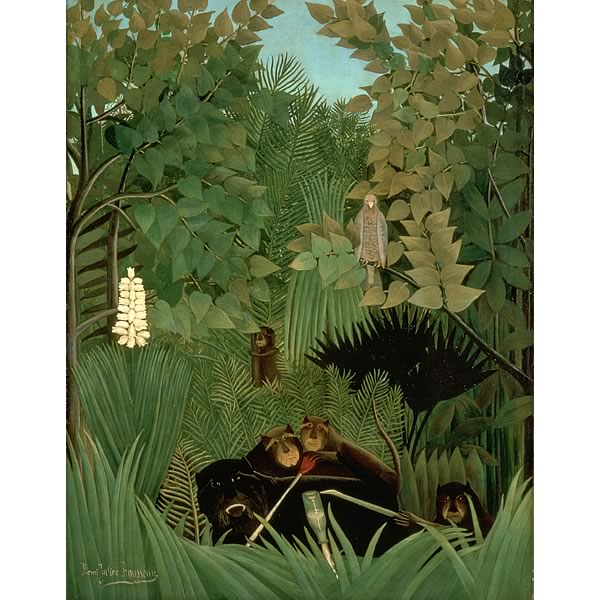

Rousseau, Joyeux Farceurs, 1906.

Profuse on earth, deliberate in music. Green, according to Scriabin, is the counterpart of A major, not the most popular of keys (though one Christian Schubart said suggests "declarations of innocent love...hope of seeing one's beloved again when parting; youthful cheerfulness and trust in God.") To me, green is the sound of funk and soul--of the thick texture of rolling bass lines, the solid backbeat, funky organs and synclaviers, chicken-scratch guitar--it is the color of the groove.

Don't take my word for it. State's evidence no. 1--"Green Onions" by Booker T. and the MGs. This live recording, from the 5/4 Ballroom in Los Angeles in August 1965, is the goods. Booker T.'s organ playing is like a graduate seminar on soul, and Steve Cropper's guitar, especially his amazing 36-bar solo, is ridiculous. Duck Dunn and Al Jackson keep it all together. Less than a week after this concert, the Watts riots began. Find this version is on Stax Profiles or on Funky Broadway.


A lighter groove, but still suitable for dancing, can be found in Larry Clinton's "Study in Green," from 1938. On Studies in Clinton.

And Can's "I'm So Green", German progressive rock madness at its finest, is on 1972's Ege Bamyasi.

Green myriads
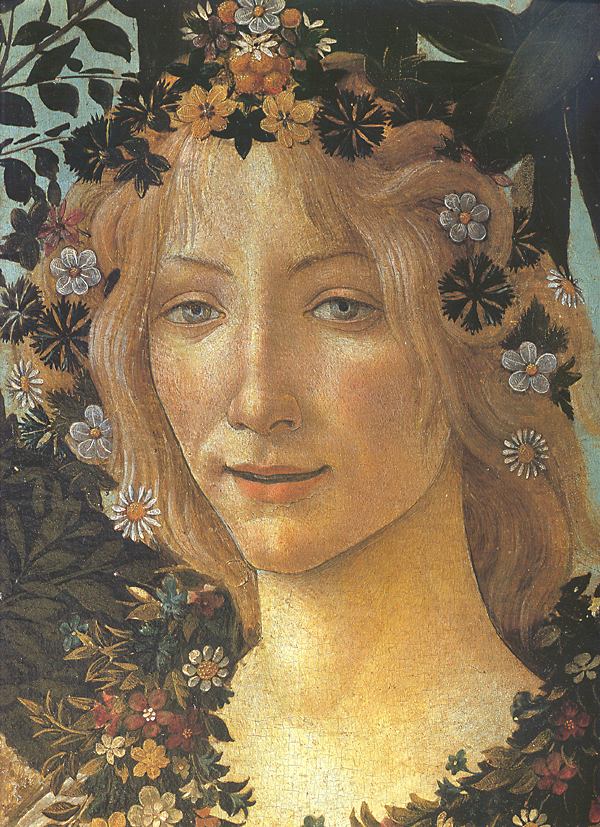

Botticelli, Primavera (detail), 1482.

Mark how it mounts to man's imperial race
From the green myriads in the peopled grass...
of smell, the headlong lioness between
and hound sagacious on the tainted green:
Of hearing, from the life that fills the flood
to that which warbles thro' the vernal wood.


Pope, Essay on Man, Epistle I.

Green is the tone of health, of the planet's drapery, nowhere better displayed than verdant-hued Puerto Rico or Ireland ("the greenest place I've never seen," wrote Marianne Moore). It's no surprise how many songs have come about in praise of the color as nature's ambassador, and in some cases as God's.

Let's begin with Hildegard von Bingen, the 12th Century composer, scientist, botanist, healer, etc., who centers one hymn of praise to the Virgin Mary around the joy of viriditas (greenness)--O Virdissima Virga. Elsewhere, von Bingen wrote: No tree grows without the power to become green, no stone lacks green moisture, no being is without this special inner strength, living eternity itself is not without the power to become green.

"O Viridissima Virga" is performed here by Jeremy Summerly & Oxford Camerata; find on Heavenly Revelations.

"How Green Was My Valley" refers to the 1939 novel by Richard Llewellyn and John Ford's 1941 film, both set in the mining hills of South Wales. Performed here in a record (from 1941 or 1942, most likely) by Vera Lynn. Find on With All My Heart.


"Green Grow The Rushes, O" is an ancient ballad, possibly going back as far as the early Christians (it was originally sung in Hebrew), though it achieved most prominence in the British Isles. It served as the inspiration for R.E.M.'s track on their 1985 Fables of the Reconstruction (of the Fables, etc.), though R.E.M.'s "Green Grow the Rushes" has a typically gnomic lyric, possibly about Mexican immigration ("find some surplus, cheaper hands"), but who knows. I haven't listened to R.E.M. in ages, as I played the band to death during high school (my arty teenage girl friends considered the young Michael Stipe a heartthrob).

Louis Jordan's "The Green Grass Grows All Around," from 1941, is the happiest cumulative song you'll ever hear. Though I've no proof, I think "Green Grass" may have influenced the creepy "Maypole Song" chanted by the pagan children of Summerisle in The Wicker Man ("and on that tree there was a limb/and on that limb there was a nest" etc.) On the Tympany Five boxed set.
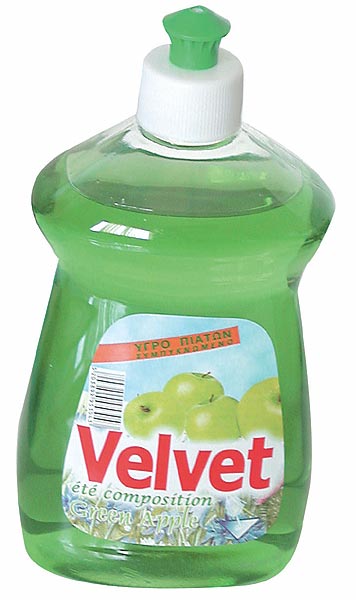


Rodgers and Hart's "Mountain Greenery" first appeared in 1925 in the show The Garrelick Gaieties (which also debuted "Manhattan"). Featuring one of Rodgers' sweetest melodies and Hart providing the sort of elegant rhymes that are close to becoming a lost art ("lover let"/"coverlet" being my favorite.) Rosemary Clooney's 1959 take is on Everything's Rosie!.

And at last, rock out with Bill Haley's "Green Tree Boogie", one of his first singles, from 1951. On Best Of.

Into the Green


Swamp Thing enters the Green

Love, meet me in the green glen,
Beside the tall elm-tree,
Where the sweetbriar smells so sweet agen;
There come with me.
Meet me in the green glen.


John Clare, Meet Me in the Green Glen.

Seeing green in excess, green upon green upon green, begins to wear on you. "A monotonous business," writes Alexander Theroux of green's dominance of nature. "Miles and miles of grass, grass, grass, trees, trees, trees, ad infinitum, a tableland of a single textile." Theroux's essay is once again a huge source of information for this entry.

The burgeoning nature of green can even cause queasiness. "See nature spuming and frothing...from the jammed glassy cells of sea roe to the feathery spores poured into the air from bursting green pods, nature is a festering hornet's nest of aggression and overkill," writes Camille Paglia in Sexual Personae.

The life forms of the great hothouse world lived out their days in ferocity or flight, pursuit or peace, before falling to the green and forming compost for the next generation.

From Brian Aldiss' Hothouse, from 1962, a novel set on Earth, millions of years into the future, when the sun is going nova and the earth has stopped its orbit, so that one side is frozen in darkness, and the other, the hothouse of the novel's title, consists of one enormous banyan tree, upon which the pathetic descendants of man, little green-skinned humanoids, are born, mate and die with the tenacity and transcience of mosquitoes.



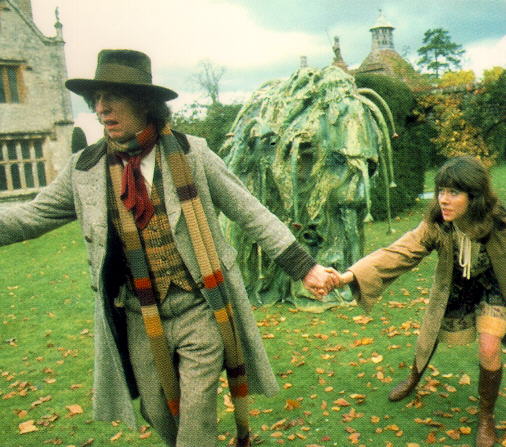
Green's relentless vibrancy can mask a drive for death and conquest, like the Plants in Thomas Disch's The Genocides. The Plants are an alien crop infestation, which begin as lime-green sprouts and, in a week's time, grow to be 600 feet tall with leaves "the size of billboards." Or take the great Doctor Who serial The Seeds of Doom, in which the Doctor and Sarah Jane Smith face the Krynoid, an alien that can animate all plant life to turn against humanity, as well as the lunatic millionaire and herbophile Harrison Chase, who says of his greenhouse: "Welcome to my green cathedral!"


"Everything's Gone Green", in which New Order's Bernard Sumner seems to be falling into the green and getting subsumed by its rhythms, is from 1982. Find on Substance.

A cool color


Jacob Fugger in His Office (ca. 1530), in which Fugger, the merchant, uses a green desktop.

Green is pleasing to the eye. The medieval bishop William of Auvergne believed that was because green sat at the center of the spectrum, between black and white, and thus the eye need neither constrict nor dilate to look at it. The surface of writing desks are often green because of this belief, as are proofreaders' green eyeshades. A 1514 health manual called Tregement der Ghesontheyt (Treatment of health) recommended staring into a green basin filled with water as a way to strengthen the eyes.

Green rooms, where actors go before or during performances, may have once been painted green to provide a relief from the stage lights. And one of the reasons surgeons and nurses wear green or green-blue scrubs is that the color better reflects the harsh white lamps in the operating theatre (plus, blood doesn't look as gruesome on a green shirt).
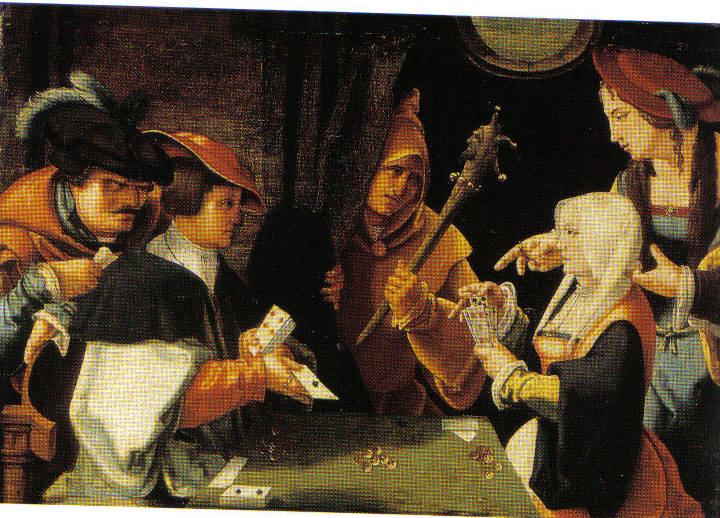

Card Players, follower of Lucas Van Leyden (ca. 1520).

And while ease on the eyes is one reason billiard, snooker and card tables generally have green baize coverings, such tables are also green to emphasize the mutability of luck, and the randomness of fortune ("the outcome on such a surface was never certain", Pleij). Above and below are two examples of green card tables.
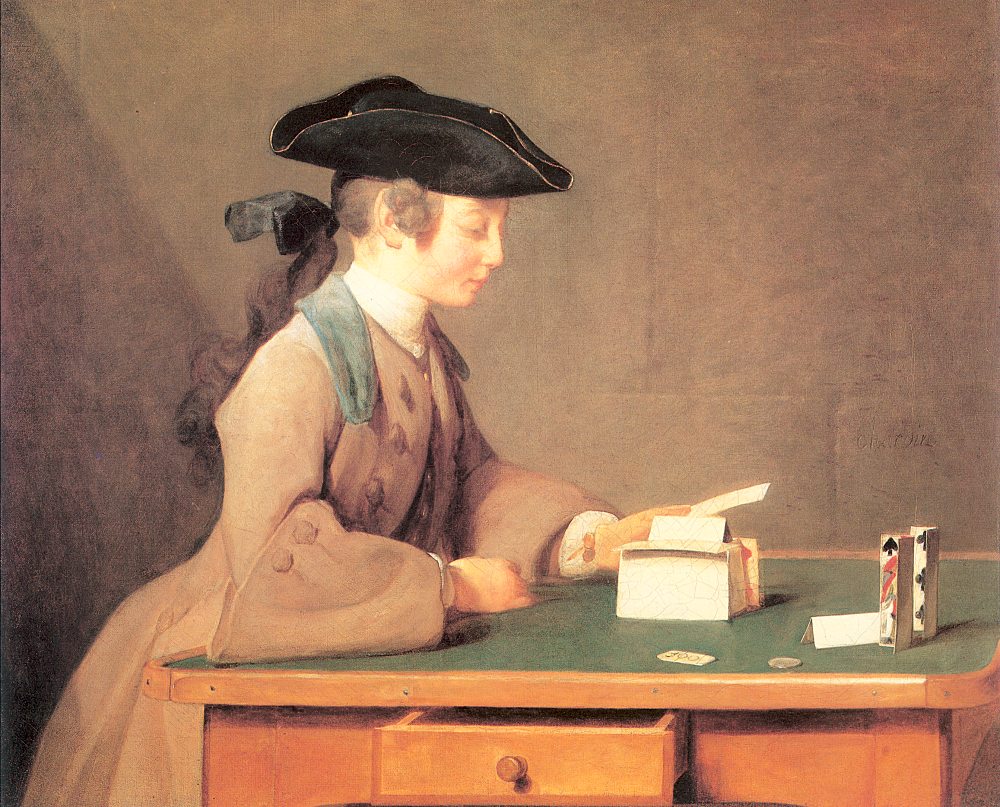

Chardin, House of Cards, 1736-37.

You could say green is a tonic for the soul. Central Park at its full vernal peak is the release valve for many New Yorkers, especially in the humid, vile summers--and in winter, you also can find solace in the pinetum on the northwest corner of the Great Lawn.
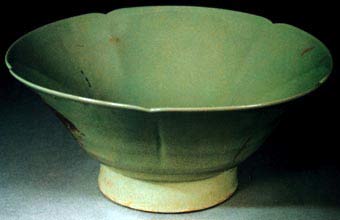


And the emperors of the Tang Dynasty prized, above all their treasures, a type of porcelain known as mi se, which has "a fading, autumnal green" color, more brown than emerald in hue. Victoria Finlay, in Color, takes her guess why: "Imagine you are an emperor, dusted with gold, surrounded by silks, held high on palanquins...Would you not then yearn for something earthy and real? [Mi se]'s blandness, to a sated appetite, would have been like a sorbet to the glutted palate."

Hope and home
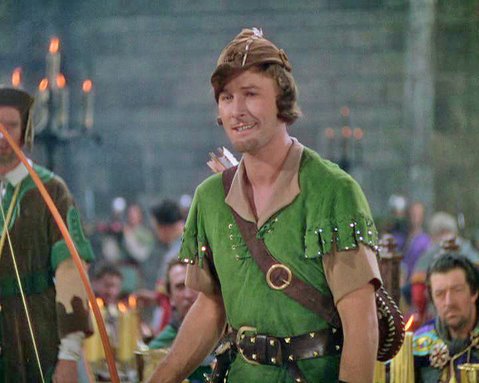

Errol Flynn in Lincoln Green


By malison of theirs is not so lost
Eternal Love, that it cannot return,
So long as hope has anything of green.

Dante, Purgatorio, Canto III.

Green is hope, it accentuates the positive--it is the color of the light telling you to hit the gas, of a stock rising in value, of the signs on the highway indicating where to go. Green bowls and cannisters are said to counter the effects of any poisonous items stored in them--the oldest piece of porcelain in the British Isles, the property of Archbishop William Warham and, latterly, New College, Oxford, is a celadon cup, seaweed-colored, which some believe was given to Warham, a diplomat during a very dangerous era--he was a contemporary of Machiavelli!--as a form of protection. (Sort of like giving Condi Rice a flak jacket).

Joy is a fruit Americans eat green.

Armando Zegri, The Golden Book.

It is the color of the light that symbolizes all Jay Gatsby yearns for. One of the most vivid images from Fitzgerald's novel has Nick Carraway spying how Gatsby "stretched out his arms toward the dark water in a curious way, and far as I was from him I could have sworn he was trembling. Involuntarily I glanced seaward--and distinguished nothing except a single green light, minute and far away, that might have been the end of a dock."


"The Light is Always Green" is a forgotten but lovely tune by the Housemartins, a pop Marxist/Christian band from the mid-1980s, led by Paul Heaton, who had one of the finest voices of his era. On 1987's The People Who Grinned Themselves to Death.

Most of all, green represents home, regardless of whether yours was a farm or tenement. Three odes to green homecomings:

Porter Wagoner's "Green, Green Grass of Home," from 1965, finds the singer coming home after a spell in prison, and the simple shade of green that he sees everywhere is both a reassurance and a mocking reminder of what he's lost. And then he wakes up. On Essential Porter Wagoner.

Or CCR's "Green River", in which John Fogerty sums up an edenic rural childhood in one pungent phrase: "barefoot girl/dancin' in the moonlight." The guitar riff's pretty great too. On 1969's Green River.

And the Kinks' "Village Green," from 1968, in which green becomes the embodiment for a whole set of lost verities. On Village Green Preservation Society.

I don't like diamonds;
the emerald's 'grass-lamp glow' is better;
and unobtrusiveness is dazzling,
upon occasion...

Marianne Moore, Voracities and Verities Sometimes Are Interacting.

'The fecundity of life and love'


Van Eyck, The Arnolfini Marriage (detail), 1434.

And here the seedlings had been set to breeding
Their small green tedium of need:
Each plant alike, each plaintively devouring...

James Merrill, The Greenhouse.

Not surprisingly, green is often linked with reproduction, with pregnancy and birth, whether plant or animal. "If I had ovulated, [the stick] would be green, the color of life and eggs and sugar fluid," wrote Sylvia Plath in a 1959 letter, after failing a pregnancy test.

Green is the color of newborn spring, of the month of May ("so green, so green, so green!" wrote Thomas Dekker), and it seethes with fecundity. Andrew Marvell, in The Mower Against Gardens, refers to a "green seraglio." The 12th Century abbot/philosopher Hugh of St. Victor wrote a praise to green: "How it enraptures the minds of those who behold it, when new buds come forth in a new spring, and, rising like little darts, as if treading down death, burst into the light, an image of future resurrection."
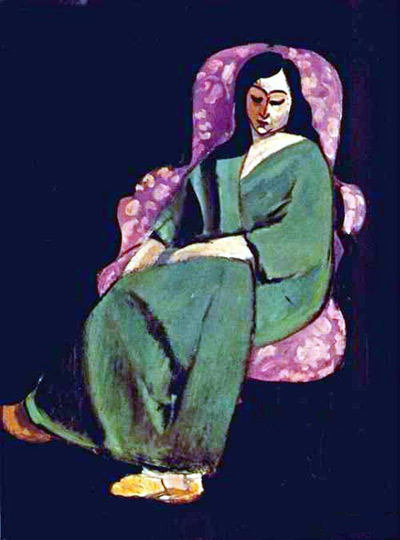


Then in the early morning
Long before Dawn time
Your lover will lie in the paddock.
Between his fingers the green blades
And the green blades pressed against his body.


Katherine Mansfield, The Earth-Child in the Grass.


Bronzino, Portrait of a Lady in Green, 1530.

Not only the green of birth, but of conception. As Sappho, in her finest lust poem, says: "My tongue sticks to my dry mouth/thin fire spreads beneath my skin...chill sweat slides down my body/ I shake, I turn greener than grass." And giving a girl a "green gown" (aka, a roll in the hay) was a standard lyric in English folk songs. As Robert Herrick wrote in "Corinna's Going a-Maying", one of the standard "we're all going to die soon, so sleep with me" poems popular in the 17th Century.

Many a green-gown's been given
Many a kiss, both odd and even...


The blade of youth
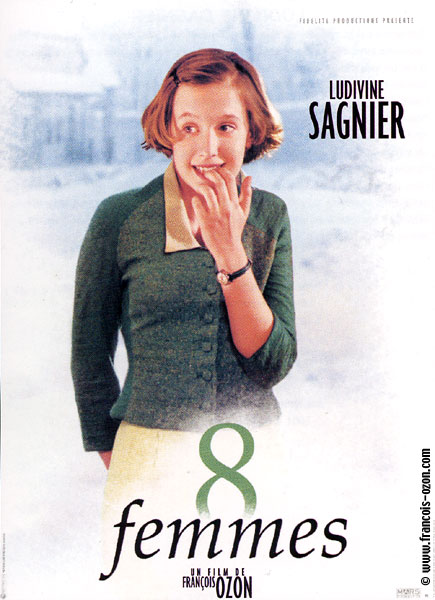


Green is also youth (think of Joni Mitchell's "Little Green") and inexperience. Green tea is unfermented tea leaves, greenware is pottery before it is baked. Shakespeare's works are filled with green youth, from Cleopatra's lamenting of her salad days, to Bertram in All's Well that End's Well, who has acted on "natural rebellion, done i' th' blade of youth", the blade being green grass. And green saturates Romeo and Juliet, "his greenest play" (Theroux)--in which the "envious" moon is "sick and green" in comparison with Juliet, who in turn is called "green-sickness carrion" by her enraged father.

Petrarch, in poem 30 of the Rime Sparse, writes of seeing "a youthful lady under a green laurel" whose image remains in his mind during the years that follow. "Then my thoughts will come to shore/when green leaves are no longer to be found on a laurel."


The young often are shown wearing green, such as Ludivine Sagnier, who dons green for much of Ozon's 8 Femmes. (Is there a loopier, more charming scene in recent film than Sagnier performing "Papa T'es Plus Dans Le Coup" in this movie? Or her and Virginie Ledoyen's dance routine to "Mon Amour Mon Ami"?)

The sound of green youth: in the early 1970s, Sibylle Baier was having a dark spell when her friend asked her to take a road trip to Strasbourg. The trip rejuvenated young Sibylle, and when she returned home, she began writing songs: "Colour Green" was one of them. Find Baier's home recordings on Colour Green, which was released last year by Orange Twin.

Green Dreams
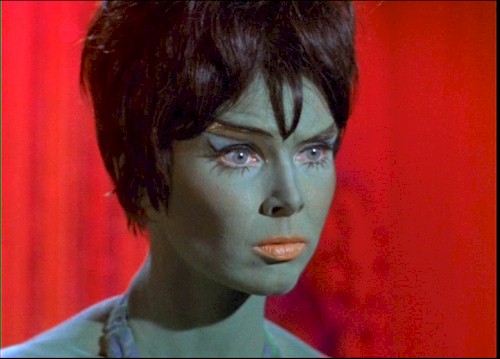


He was describing, as all young poets are forever describing, nature, and in order to match the shade of green precisely he looked (and here he showed more audacity than most) at the thing itself, which happened to be a laurel bush growing beneath the window. After that, of course, he could write no more. Green in nature is one thing; green in literature another.

Virginia Woolf, Orlando.

Despite its commonplace appeal, green can be mystical, unnerving at times. Duke Ellington, for one, hated the color and never wore it: "He was a city boy. Green was like grass, and grass reminded him of graves," said Duke's biographer, Derek Jewell.

Green eyes are often signs of the supernatural, or of exceptional ability, or simply danger ("All that is not equal to the poison which flows/From your eyes, from your green eyes," Baudelaire, "Le Poison"). Rasputin had green eyes, as did Becky Sharp, Ichabod Crane, Thomas Gray's poor drowned cat, Ted Williams, Samuel Beckett and Sharbat Gula, the Afghanistani woman immortalized on National Geographic's 1984 cover (below). And in Joyce's "An Encounter," from Dubliners, a pair of boys encounter a shabby pervert who, as the narrator describes, had "a pair of bottle green eyes peering at me from under a twitching forehead."



"Green Eyes", from Husker Du's 1985 Flip Your Wig, is one of their prettiest songs. And "Green Eyed Lady," Sugarloaf's one-hit wonder from 1970, can be found here.


There's a man trying to sleep but, some paces away, stands a great green door, behind which he hears sounds of a party--people laughing, a piano banging, horns, shrieks. He stares at the door, wondering what it could open into--a casino? A private sex club? He knocks, and no one responds; he knocks again and says he has an invitation--the door opens a crack. "Joe sent me!" the man yelps. And there's a thick laugh and slam! the green door is closed again.

Jim Lowe's "Green Door" is from 1956. A gift from the Rev. Frost, currently enjoying a well-needed vacation. Find it on the asininely-titled Great Men of Rock & Roll.


And then there's Esquerita's (or Eskew Reeder's) version, from 1962, which distills the question down to a couple phrases and lets the organ take care of the rest. It's of my favorite records: this is rock and roll--accept no substitutes. This version is a bit hard to find--one place is here.
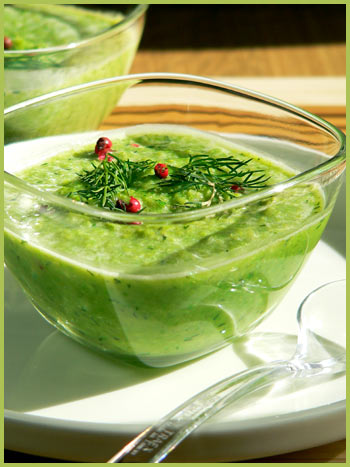


Although red is considered the color of revolution, green has had its own incendiary past. During the English Civil War, Oliver Cromwell's troops wore green ribbons, and Anthony Ashley Cooper, the tormenter of Charles II and founder of the Whigs, worked and plotted at the Green Ribbon Club. And Carlyle, in the French Revolution, described Robespierre as a "sea green incorruptible."

But like some revolutions, green can fade into corruption--it is the color of army fatigues worn by liberators-turned-dictators (a friend of mine had a rule of thumb--if your country is being run by a guy who wears military gear everywhere, it's time to get out). Elvis Costello's "Green Shirt," from 1979, refers to the seductive sheen of a newscaster's blouse, but is it also an army uniform? Are they the same? "Green Shirt" is from Armed Forces, originally titled "Emotional Fascism."
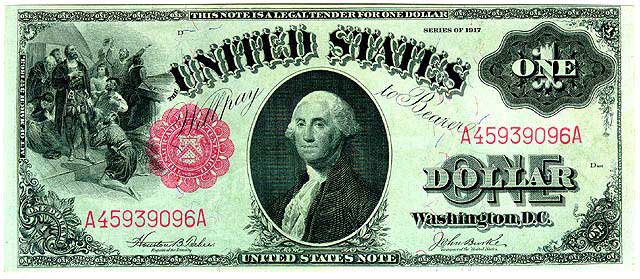


And green is, of course, the color of money. The Weems String Band, a family band from Perry County, Tennessee, made only one recording, on December 9, 1927, but what a testament: their take on the traditional "Greenback Dollar" just rips and roars. On the wonderful collection Down in the Basement, a compilation of vintage 78s collected by Joe Bussard and put out by Old Hat Records.

"Just a little piece of paper/coated with chlorophyll." Ray Charles's "Greenbacks", from 1954, is on Ultimate Hits.

Greensleeves

Is green finite? After all, if it is the color of spring and birth, winter and death would seem likely to fade it away. But green is not just youth and growth, but suggests permanence as well. Whenever green withers, there is the assurance it will revive someday. Listen to King Henry VIII, poet:

Green groweth the holly, so doth the ivy.
Though winter blasts blow never so high,
Green groweth the holly.

As the holly groweth green
And never changeth hue,
So I am, and ever hath been,
Unto my lady true.


Henry VIII, according to legend, is the author of "Greensleeves" as well, having composed it when he was courting Anne Boleyn. It is a pledge of constancy to an unconstant lover, a lyric made sickly ironic when the cold facts of history--of Henry and Anne's doomed union, her execution, his ceaseless marrying--are impressed upon it.

Ah, Greensleeves, now farewell, adieu,
To God I pray to prosper thee,
For I am still thy lover true,
Come once again and love me.


"Greensleeves", as if carried on the wind, prospered and transformed over the centuries, lending its melody to Gustav Holst and Ralph Vaughan Williams, to the Christmas carol "What Child Is This" and the Mister Softee ice cream trucks, among a host of others.

And one night, in New York, in late 1961, John Coltrane takes a breath on the stage of the Village Vanguard. A hush, then Reggie Workman, McCoy Tyner and Elvin Jones begin, entering in staggered perfection. Then comes Trane--he first lets the melody quietly unfold, stately and restrained, until Jones rumbles behind him, and then, as if nudged, Coltrane soars upward. For a handful of minutes, the North Carolina-born Coltrane and his partners take the Tudor king's song and work marvels with it. On the essential The Complete 1961 Village Vanguard Recordings.
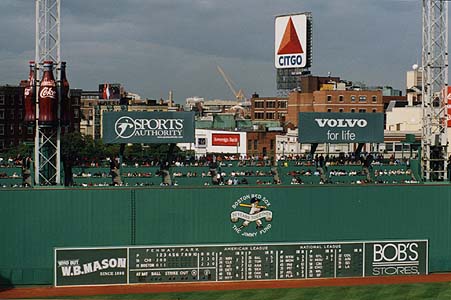

The Green Monster

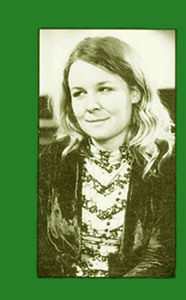
Cover star: Sandy Denny.

Next:

O coward conscience, how dost thou afflict me!
The lights burn blue. It is now dead midnight.
Cold fearful drops stand on my trembling flesh.

Wednesday, July 26, 2006

6 Cardinal Colors: Yellow


Frank Sinatra and Duke Ellington, Yellow Days.
Frank Sinatra, The Moon Was Yellow.
Zhang Ruei, Song of the Yellow River
Oregon, Yellow Bell.
Syd Barrett, Golden Hair.
Screamin' Jay Hawkins, Yellow Coat.
The Ventures, Yellow Jacket.
Yo La Tengo, Yellow Sarong.
Peggy Lee, Golden Earrings.
Cab Calloway, Yaller.
Leadbelly, Yellow Gal.
Gene Autry, The Yellow Rose of Texas.
Arthur Collins and Byron G. Harlan, When That Little Yellow Fellow Plays Piano (Hannah Plays Banjo).
Randy Newman, Yellow Man.
Harry Raderman's Jazz Orchestra, Yellow Dog Blues.
Bessie Smith, Yellow Dog Blues.
The Beatles, Mean Mr. Mustard (demo).
The Idle Race, Here We Go Round the Lemon Tree.
20/20, Yellow Pills.
Brian Eno, Golden Hours.


And she walks firmly through the color yellow
to cry, because I seem to her to be
getting old, on the blade of my sword,
in the delta of my face.

César Vallejo, El Buen Sentido (The Right Meaning).

Yellow is the most contradictory of colors, signifying both sacredness (the nimbi of angels and saints, crowns, wedding rings) and bodily rot; it marks both the fruit of harvest and the sere touch of winter. But, when pressed, the dark side of yellow tends to win out. It is few people's favorite color--many find there is something disturbing about it. "The yellow stripe/of thin but valid treacheries," as Edna St. Vincent Millay wrote in The Plaid Dress.


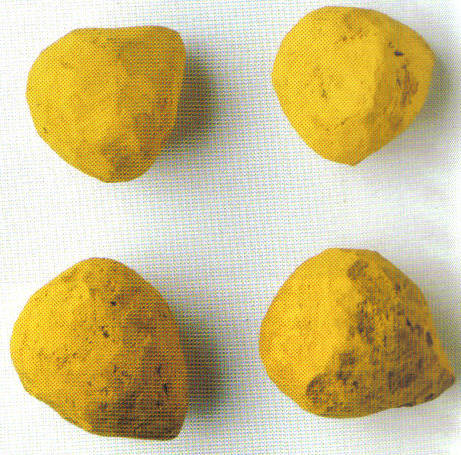
It is the color of betrayal and cowardice, of sorrow, hunger (starving people's flesh often yellows) and death, of some of the body's viler aspects and afflictions: it is the hue of bile, adipose tissue, plantar warts, eye crusts, pus ("Yellow matter custard/dripping from a dead dog's eye", as John Lennon sang in "I Am the Walrus"), weak bruises, plaque on teeth, and urine. Indeed, Indian yellow, the coveted yellow pigment that was favored by 19th Century artists, was said to be made out of snake urine, or camel urine, or, my favorite, from the piss of cows that were fed mango leaves. (From Victoria Finlay's Color, in which Finlay travels to Bihar to find the source of the yellow.)


Indian yellow pigment nuggets--wash hands after using

The color is repellent, almost revolting; a smouldering unclean yellow, strangely faded by the slow-turning sunlight.

It is a dull yet lurid orange in some places, a sickly sulphur tint in others.

No wonder the children hated it! I should hate it myself if I had to live in this room long.


So writes the narrator of Charlotte Perkins Gilman's The Yellow Wallpaper, describing her room of confinement. Later in the story she adds, "It is the strangest yellow, that wall-paper! It makes me think of all the yellow things I ever saw--not beautiful ones like buttercups, but old foul, bad yellow things."

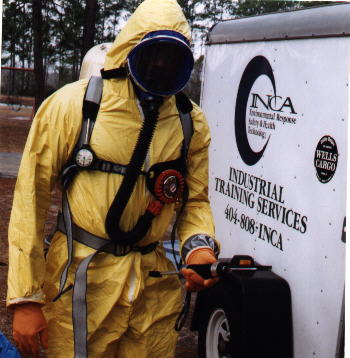
While red and orange are also the colors of warnings, doom and danger, yellow has specifically unnerving connotations--a yellow flag flying indicates quarantine, having a "yellow sheet" indicates a criminal record, life-vests on airplanes are generally yellow, and yellow is the most common color of fallout shelter signs and haz-mat suits.


And a whole age of lingering moments crept
Sluggishly by, ere more contentment swept
Away at once the deadly yellow spleen.


Keats, Endymion.

But for all its sins, yellow goes well with music. Both Scriabin and Rimsky-Korsakov heard yellow and gold in the key of D major (fittingly, the key of "Mellow Yellow"), considered the "key of glory" by many composers of the Baroque period, and used in dozens upon dozens of violin and horn concertos throughout the centuries.

Many people hear in unison brass or winds a solid, resounding gold color. Whitney Balliett wrote of Duke Ellington's clarinets having a chrome yellow tone, Alex Ross of the "dark-gold sound" of the Berlin Philharmonic. (And do the uniform yellow spines of Deutsche Grammophon classical LPs and CDs create the illusion of a golden sound in the performances of von Karajan, Anne-Sophie Mutter and others?)


Bernie Fuchs, Pensive Moment, 1981

Happy memories seem golden, as reported in the Frank Sinatra-Duke Ellington duet "Yellow Days." "Yellow Days" is a strange bird--the song, written by Alvaro Camarillo, was originally known as "La Mentira" ("The Lie") whose original lyrics were a fevered paean to jealousy and betrayal, and whose final lines are: "You feel no pain to leave me/And this covenant is not with God!". However, by the time Duke and Sinatra performed it in 1968, "La Mentira" had been renamed "Yellow Days" and acquired a new set of lyrics, by Alan Bernstein, in which all the lust and despair has been transmuted into golden nostalgia. On 1968's Francis A and Edward K, one of the last good Sinatra (and Ellington) records. Sinatra reportedly wore a yellow-green paisley necktie to the sessions, for which I blame Mia Farrow.

Turn me to my yellow leaves,
I am better satisfied;
There is something in me grieves—
That was never born, and died.


William Stanley Braithwaite
.


Matisse, Deux fillettes, fond jaune et rouge, 1947.

And follow it up with a recording from Sinatra's own yellow days, the florid "The Moon Was Yellow", from 1945. Sinatra would record "Moon is Yellow" again in the '50s and '60s, but this, his earliest take, is a bit hard to find on CD these days--it's buried deep in the wildly expensive Complete Columbia Years and that's about it. You might want to seek out some LPs of the Columbia period, such as the 2-LP set In the Beginning, which is my source for it.

Keen lemon-yellow hurts the eye as much as a prolonged and shrill bugle note note the ear.

Vassily Kandinsky, Concerning the Spiritual in Art.

The sacred yellow


One great exception to the cultural distaste for yellow is in China, where yellow has always been the color of royalty, dating back to 2600 BC, the days of the Yellow Emperor Huang Di (who is buried in the Yellow Tomb). Emperors were carried on yellow sedan chairs, actors in Chinese opera painted their faces yellow to indicate piety, Confucian ceremonies are often performed by people wearing yellow. For China's neighbors, the color became China's trademark--the Japanese courtesan/genius Sei Shonagon wrote of "Chinese-yellow coats" in her Pillow Book.

The Yellow River gets its name from the fertile yellow mud along its shores. "Song of the Yellow River" is performed by the composer Zhang Ruei on the erhu, a traditional Chinese instrument. If you live in or visit NYC and ever take the N/R/W train, a guy often plays erhu on the 57th St. platform. On Moon Reflected in Er-Quan, from last year.

And the meditative "Yellow Bell" is by the jazz group Oregon, which attempted to fuse Western and Eastern musics--with sitar, tabla, oboe and guitar in lengthy conversation with each other. On the out-of-print Out of the Woods, from 1978.


Gauguin, Yellow Christ, 1889.

At the gateway
Of evening, of lion-blond autumn, leonine death-gold of autumn
Adorning, the answer does come, in splendor of lutesong
Arising within me:
the soul is alone
--like the flowers of
Yellowwoods…

Allen Grossman, Sentinel Yellowwoods.

Blonde on Blonde


Of course, blonde hair is perhaps yellow's finest accomplishment, at least the one popular culture seems to welcome the most. Preference for blond hair even dates back to the classical era, and by the Middle Ages women were dying their hair yellow, even in areas like Scandinavia, where blondes were common. (Blonde on Blonde was rumored to be Dylan's reference to Edie Sedgwick, who dyed her natural dirty-blonde hair a platinum sheen.) Why blondes? (don't ask me--I'm a brunette fan.) Some think it dates back to the belief that blondes had been touched by the sun, with the sun's gold having a blessed quality to it. (“the gold of heavenly sunlight represents the only positive manifestation of yellow”--Herman Pleij.)


And you could spend years recounting the number of notable blondes, from Sam Spade (described by Dashiell Hammett as looking like "a blond Satan") to Thor to Rita Hayworth's shocking blonde bob in Lady from Shanghai.

The late Syd Barrett's "Golden Hair" is off 1970's The Madcap Laughs.

Wearing yellow

In the West, yellow has typically been the color of heathens and outsiders--in the Middle Ages, Jews and Muslims had to wear yellow. For example, the Fourth Lateran Council of 1215 mandated that Jews had to be "marked off in the eyes of the public from other peoples through the character of their dress." This meant they had to wear yellow identification badges, or pointed yellow hats--800 years later, the Nazis forced Jews to wear yellow cloth armbands. And during the Spanish Inquisition, heretics were forced to wear the sanbenito: "victims were robed in yellow, to denote heresy and treason." (Alexander Theroux, whose essay once again has served as a huge source of information.)


It was considered a great insult to wear yellow in the presence of an equal or superior, and those that did were essentially throwing down the gauntlet – for example Hendrik van Wurrtemberg ordered his entire retinue to dress in yellow livery as they marched past the Duke of Burgundy, Charles the Bold, in 1474. As late as the eighteenth century people would wear yellow hose or yellow shoes as signs of jealousy.

We ignore the coming doom of gold
and we are glad in this bright metal season.
Even the dead laugh among the goldenrod.


Sylvia Plath, Gold Mouths Cry.

Don the yellow wardrobe:


What walks on two feet
and looks like a goat?
That crazy Screamin' Jay
in a bright yellow coat!


"Yellow Coat", a great bit of rock & roll surrealism from Screamin' Jay Hawkins, is from 1957. Screamin' Jay's coat, made out of goatskin and...ugh, is it foreskin? Or frogskin? The get-up is outlandish that even a tribe of mountain goats gather around to stare at him. On Voodoo Jive.


"Yellow Jacket" was a single released in 1962 by the Ventures, and also included on one of the inspirations for this series, their LP The Colorful Ventures. This version, however, is from Live in Japan '65, possibly the best recording the band ever made. It's loud, fast, and the Ventures stomp through it all the way--they get through some 29 songs in little more than a half-hour.


"Yellow Sarong" was originally recorded by the 1980s NYC-based The Scene is Now. This cover by Yo La Tengo is from 1990's Fakebook, one of my favorite records of theirs.


Yellow can be the color of celebration. Hindus, for example, wear yellow to welcome the arrival of spring on Vasant Panchami. And it is the color of less noble types of rejoicing--in 1536, Henry VIII, Anne Boleyn and their court (including the young Princess Elizabeth) wore yellow to celebrate the death of Henry's first wife, the long-suffering Catherine of Aragon, who had been hindering Henry and Anne from getting married. (Anne, having failed to provide a male heir and increasingly getting on Henry's nerves, would head to the chopping block the same year to make room for Henry's third wife, the fecund but equally doomed Jane Seymour.)

"Golden Earrings", Peggy Lee's gypsy fantasy from 1947, is on The Early Years.

Yellow Roses

Ain't even bad, I ain't even good,
I don't understand and I ain't understood,
Not a friend sticks to the end when you're yaller.


Yellow, in the United States, has had a long, weary racial history. In the 19th Century, it became common to refer to people of mixed race ancestry, such as Creoles, as "yellow". By the early 20th Century, the phrase "high yellers" had come into vogue--often referring to light-skinned black women ("Are they all banana-colored at Grande Anse? and all as pretty as these?" asks Lafcadio Hearn of the local women in Two Years in the French West Indies.) And a special, wounding type of prejudice against lighter-skinned blacks continues to this day.

In song, lighter-skinned blacks were either referred to with longing and envy ("I'm steppin' out with them high yellows/Snubbin' all the other fellows" goes a line in "Honey Hush") or as tragic figures, trapped between the black and white worlds. The poignant "Yaller" describes the latter. Libby Holman first sang it in Three’s A Crowd, in 1930. Cab Calloway's take, from the same year, can be found on The Early Years.

"Yellow Gal," from 1940, is by Leadbelly with backup by the Golden Gate Jubilee Quartet. On Take This Hammer.

"Yellow Rose of Texas" was originally about an African-American woman, possibly Emily West, a free-born black woman. Some of the first lyrics went as follows:

There’s a yellow rose in Texas
That I'm a goin' to see
No other darky knows her
No one only me

She’s the sweetest rose of color
This darky ever knew
Her eyes are bright as diamonds
They sparkle like the dew

But after the Civil War, when the song became a popular standard, the references to race not-so-mysteriously vanished. Gene Autry's classic version, from 1933, is on Essential Gene Autry.

And then we have a slice of pure mistrelsy, "When That Little Yella Fella Plays Piano," as performed by Collins and Harlan in 1916.


Yellow has also been an identifying slur used against Asians for more than a century (more on the "Yellow Terror" or "Yellow Peril" here). Randy Newman's "Yellow Man", from 1970's 12 Songs, is one of his first racism satires--sequenced, on the LP, between a straight-faced cover of the 1920s "uptown darkies" song "Underneath the Harlem Moon", and "My Old Kentucky Home", an ode to inbred rednecks. "Yellow Man" is, as Newman said on his Live LP, a pin-head's fantasy about the life of Asians.

Gone to the Yellow Dog

'Yellow dog' is one of those marvelous American phrases--a "yellow dog" Democrat is an utterly loyal Democrat who would vote for a yellow dog rather than a Republican; a 'yellow dog' contract forbids an employee from joining a union. 'Yellow Dog' was also the name of a notorious bootleg CD manufacturer of the 1990s.

"Yellow Dog Blues," written by WC Handy in 1914, refers to the Southern Railway's intersection with the Yazoo Delta Railroad, known locally as the "Yellow Dog." (The legend is that a railroad worker, seeing the Y.D. initials on a Yazoo Delta train, said they stood for "Yella Dog.") So "Your easy rider's gone where the Southern cross the Yellow Dog" means, essentially, that your man has skipped out on you by catching a train going out of town.

It soon became a jazz staple--Harry Raderman's Jazz Orchestra worked on "Yellow Dog" in 1921, and Bessie Smith's fantastic version is from 1925, and features Fletcher Henderson on piano and Coleman Hawkins on tenor sax. On Complete Recordings Vol. 2.

The sallow and the surreal

What about yellow is so unnerving? Yellow eyes generally denote something mysterious and alien. The medieval Flemish poet Jacob van Maerlant wrote, in his 'natural history', of a “cruel people east of India" who have yellow eyes. So does Rosemary's baby ("he has his father's eyes!"). Ray Bradbury's Martians have "yellow coin eyes" ("every morning you could see Mrs. K eating the golden fruits that grew from the crystal walls.")


Yellow faces are also generally sources of fear, from Mrs. Danvers in Daphne Du Maurier's Rebecca, who has patches of yellow beneath her ears, to some of Sherlock Holmes' more ghastly enemies, like Dr. Roylott in "The Adventure of the Speckled Band" who has a "face burned yellow with the sun and marked by every evil passion."


The Yellow Kid

Perhaps yellow simply signifies the unknown. Marlow, the narrator of Joseph Conrad's Heart of Darkness, on his way deep into the Belgian Congo to find Kurtz, views a Congo map "marked with all the colors of the rainbow":

There was a vast amount of red--good to see at any time, because one knows that some real work is done in there, a deuce of a lot of blue, a little green, smears of orange...However, I wasn't going into any of these. I was going into the yellow. Dead in the centre. And the river was there-- fascinating--deadly--like a snake. Ough!

"Mean Mr. Mustard" was a song fragment John Lennon wrote in India, in 1968--he never really came up with a chorus (you can verify that by listening to this demo, recorded in the weeks before the Beatles began the White Album sessions), and shelved the song until the Beatles were looking for scraps to be sewn together in the "Long Melody" on Abbey Road the following year. On Anthology 3.

Yellow, like orange, has its psychedelic side. If only all psychedelic songs were as fun as "Here We Go Round the Lemon Tree", in which the singer spies on his next door neighbor, a girl in a silver bikini who dances, chanting, around a lemon tree in her back yard. He throws stones at her to calm her down, and when that doesn't work, he puts on a pair of green underpants and joins her dance. The song was originally recorded by the Move; this is a 1967 cover by the Idle Race, Jeff Lynne's first band. It's a rarity--the only place you can find it is on the expensive, out of print and possibly bootleg Back to the Story.


Franz Marc, Yellow Cow, 1911.

It's also a common pharmaceutical color. Nembutal, which Marilyn Monroe used in her overdose, has a slang name of "yellow jackets," and 5 mg Valium (the most common dose) is yellow as well ("and though she's not really ill/there's a little yellow pill", sang Mick Jagger of the pill-popping housewife in "Mother's Little Helper"); "yellow sunshine" is a common name for acid. 20/20's "Yellow Pills" is from 1979. Find it on tons of 'power pop' compilations, like this one.

Enough--sit down and watch the golden hours pass. From Brian Eno's Another Green World.

Yeah, I know--no "Mellow Yellow". No "Yellow Submarine", or that Coldplay song. Did you really need to hear them again?


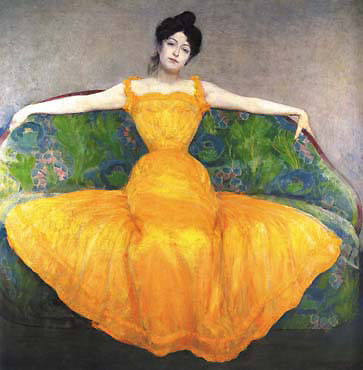
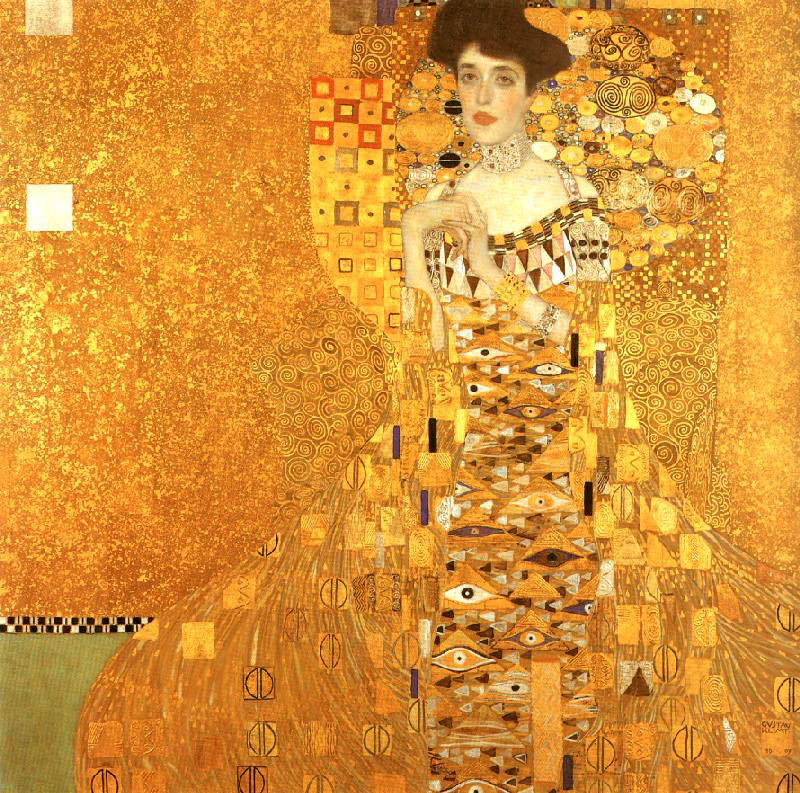
Cover star: Klimt's Adele Bloch-Bauer.

Next:

My salad days,
When I was green in judgment: cold in blood,
To say as I said then!

Tuesday, July 18, 2006

6 Cardinal Colors: Orange


Charles Mingus, Song With Orange.
Henry Mancini, Orange Tamoure.
Henry Mancini, The Orange Float.
Frank Trumbauer Orchestra (with Bix Beiderbecke), Clarinet Marmalade.
Nat King Cole, Orange Colored Sky.
Love, Orange Skies.
The Band, Orange Juice Blues.
Luna, Orange Peel.
Pietro Mascagni, Gli Aranci Olezzano.
Dawn Upshaw, The Girl With Orange Lips.
Jimmy Dorsey Orchestra, Tangerine.
Led Zeppelin, Tangerine.
George Wilton Ballard, When It's Orange Blossom Time in Loveland.
Johnny Cash, Orange Blossom Special.
Muriel Rukeyser, The Ballad of Orange and Grape.
Lady Sovereign, Tango.
The Rudies, Orange Street.


Late lies the wintry sun a-bed
A frosty, fiery sleepy-head;
Blinks but an hour or two; and then
A blood-red orange, sets again.

Robert Louis Stevenson, Wintertime.

Forritsome


Orange is a color granted little respect; it is a clown color, a fashion misstep. A secondary color, its parents are fierce red and callow yellow, and like some children from brutal, ill-advised marriages, it has compensated for its chaotic heritage with a sense of inflated boldness-- it's the embodiment of the loud and ridiculous, a gander's color. Alexander Theroux bestows upon orange the obscure but fitting adjective "forritsome," a Scottish word meaning strong or bold. Victoria Finlay, walking in the city hall in Cremona, Italy, spies an orange-stained Stradivarius on display: "It is the orange violin which jumps out straightaway, shouting: 'Look at me first!'; the yelow and brown ones don't make the same demands."


And where some colors seem completely inseparable from music, orange is a wallflower, with little sense of rhythm or grace. Used in lyrics, "orange" is often a disaster, a limpet mine of a word that can take down a whole stanza, with its utter lack of rhyming partners and whose very sound is awkward to sing (the harsh "awwr" syllable, followed by the unsatisfying bit of teeth-gritting "inj").

Charles Mingus' "Song With Orange" was written for a never-produced TV drama in which a rich girl taunts her poet/piano-playing boyfriend by challenging him to write something with “orange” in the title. He couldn't, but Mingus did. Featuring an arrangment in which Mingus honors his debt to Duke Ellington, "Song With Orange" is from 1959's Mingus Dynasty.

And in terms of musical sound, orange's gawkiness persists. The instruments I most associate with orange sounds are the jokier ones, the Spike Jones contingent--accordions, kazoos, pennywhistles, washboards, bongos, maracas, gongs, Farfisa organs.


If you had to a choose a composer whose works seem steeped in an orange tint, my vote goes to Henry Mancini, the house composer of Hollywood's mortuary years, the grim period from 1960 to 1975 when the same people who had been making films since the introduction of sound were still in positions of power, and inflicting one lifeless, overblown picture after another upon a bored, dwindlng audience (Dr. Doolittle, How to Succeed in Business Without Really Trying, Cat Ballou, Camelot, Paris When It Sizzles, Cleopatra, etc.). Mancini's pieces just seem orange--in their exuberant tackiness, their unmistakable period flavor.


The irresistable "Orange Tamoure" is from 1963's Charade, aka the best Hitchcock film Hitchcock never made (starring Audrey Hepburn, with whom Hitchcock was obsessed for a time, and who (wisely) never worked with him). Soundtrack here. And "Orange Float" is from 1975's Return of the Pink Panther, and conveys the sordid weariness of sitting in a cocktail lounge way past the time you should be in bed, suggesting half-hearted adulteries, watery drunkenness and the way the orange-brown carpet seems to be moving in the half-light. Find here.

Others grant orange a bit more musical dignity. Scriabin assigned to it the welcoming, easy-to-sing key of G major ("Georgia on My Mind,""Dock of the Bay," Eine Kleine Nachtmusik, tons of country songs). And Theroux, for one, hears orange in the high C's that Louis Armstrong hits in tracks like "Potato Head Blues" and "Ding Dong Daddy (from Dumas)."

In Frank Trumbauer's "Clarinet Marmalade," from 1927, you can hear the sound of orange-hued exuberance. An old hit for the Original Dixieland Jazz Band, "Marmalade", in Trumbauer's hands, becomes a showcase for a number of emerging giants, including Jimmy Dorsey, who here provides the clarinet marmalade, Eddie Lang on guitar, Trumbauer himself on C-melody sax and Bix Beiderbecke on cornet, who soars over the rest; a few years later, a worse-for-wear Bix found, upon reading a transcription of this solo, that he couldn't play it anymore. Find on Bix Beiderbecke Story.

Dance the orange. Who can forget it?
How, drowning in itself, it struggles to
deny its sweetness. You possess it.
It preciously converts itself to you.

Dance the orange. The warmer season
weave around you, so it ripely shines
in the air of its homeland! Radiant, reveal

fragrance after fragrance! Create the liaison
between the pure, forbidding rind,
and the juice, with which this happy fruit is filled!


Rainer Maria Rilke, Sonnets to Orpheus.

Nothing is real


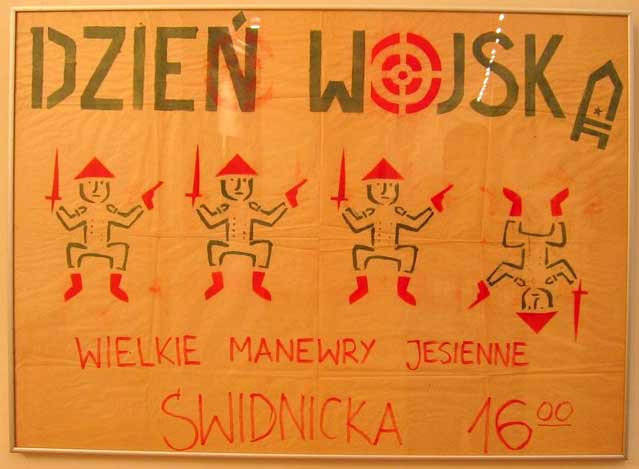
While orange is a natural enough color, something about its hue seems otherworldly to us, strange, bizarre, supernatural. It is a key color of psychedelia, and of surrealism: it is the color of the ant-covered watch in Dali's Persistence of Memory, or of the landscape of "Lucy in the Sky with Diamonds," with its tangerine trees and marmalade skies. In Bacon's utopia New Atlantis, the men wear orange shoes. The Orange Alternative was the name of an anarchist group that painted graffiti dwarfs on the walls of Communist Polish cities (a 1987 poster is shown above). When James Mason, in Nicholas Ray's Bigger Than Life, begins going mad after taking cortisone, one of his first acts is to make his wife buy an orange-colored dress.

Years later, Ray explained why he chose the color: "The orange was inevitable...Later when the highway departments began using orange instead of red for the protection of road workers, and for important danger signs, I felt my psychology had been verified. Strange that it took us so long to wake up to that color. Perhaps because the literary strength of red. No significant orange literature."


"Orange Colored Sky" is one of Nat King Cole's biggest hits, from 1950, in which the mere presence of Cole's new love seems to wreak havoc with nature. With the Stan Kenton Orchestra. Find on Greatest Hits.

And Love's "Orange Skies", in which the inspiration is more chemical if not less dramatic than Cole's, is from 1967's Da Capo.

The orange


Orange is unique among the colors in that it can be tasted--that is, via the fruit its identity is entwined with.

Like homo sapiens, the orange has slowly spread across the globe (and beyond--you likely recall the astronauts drank Tang). The citrus plant's origins are in Southeast Asia, with the earliest orange groves likely located in China (the first known reference to oranges comes in 500 B.C., in Confucius' Five Classics). At first, the orange makes tentative steps eastward, to Japan and other Pacific islands, but then changes course and heads west, as if on a grand aristocratic tour of emerging civilizations. It appears two thousand years ago in India, where it is mentioned in the Charaka-Samhita. And then, caravansary by caravansary, the orange reaches Persia, where it at last given its familiar ancestral name, narang, itself derived from the Sanskrit nāraṅgah.

Then it is a journey ever westward, from Persia to today's Israel and Lebanon, then to Northern Africa and the Mediterranean. The Crusaders brought oranges to Northern Europe upon return from their wars; their opponents the Arabs introduced the orange to Spain.


St. Augustine wears orange in contemplation

"Gli aranci olezzano" (something like 'the scent of the orange trees') is from the beginning of Pietro Mascagni's Cavalleria Rusticana, from 1890, one of the few 'verismo' operas (essentially, an Italian version of Naturalism) that remains popular today. "Olezzano" is sung by the peasants of a Sicilian town in which the action occurs--it's a celebration of love and nature that comes before the eruption of violent passions by the opera's doomed lovers, Alfio, Turridu, Santuzza and Lola. This recording, from 1966 and conducted by Herbert von Karajan, can be found here.

Oranges have bloomed seemingly everywhere--there was even a vogue for oranges in Elizabethan England: Sir Francis Carew planted orange trees in Surrey in the 1560s, which outlived the Tudors and Stuarts and at last died in 1740, killed by a hard cold winter, while Thomas Cardinal Wolsey, walking in Tudor London, would carry a hollowed-out orange in which he had placed a sponge saturated in vinegar; when the smells of London proved too much, he would bring the orange to his face and bury his nose in it. And it was around this time when children in England began to sing "Oranges and lemons/say the bells of St. Clemons."

And when the galleons of Queen Isabella sailed to North America, the orange came with them--the orange groves of Florida and California, which have become some of the world's largest producers of the fruit, are immigrants. Pizarro brought the fruit to Peru, de Soto to Florida and Catholic missionaries carried it to California.


At the time John McPhee was writing his fantastic essay Oranges in the mid-1960s, there had been a sudden shift in American tastes toward favoring concentrate instead of drinking naturally-squeezed orange juice. Orange juice concentrate--that is, boiling orange juice, separating it and reassembling it, adding flavor and freezing it into small metal cans--became huge after WWII, to where, by 1965, U.S. per capita consumption of fresh oranges had fallen by 75%. It was a typical postwar move, in which the cumbersome past was discarded for the homogenized, cheap present--it is the story of urban renewal in miniature. Of course, by the 1980s and '90s, people grew tired of drinking concentrate, prompting a renewal in "freshly squeezed" orange juice in cartons. No doubt the wheel will turn again and people will be chewing orange concentrate pills by the year 2030.

I the Trinity illustrate,
Drinking watered orange-pulp--
In three sips the Arian frustrate
While he drains his at one gulp.


Robert Browning, Soliloquy of the Spanish Cloister.

"Orange Juice Blues", or "Blues for Breakfast," was one of the songs the Band was performing during the "Basement Tapes" sessions of 1967--most of the Tapes are Dylan compositions or other covers, but a handful of Robbie Robertson and Richard Manuel songs were tried out as well. "Orange Juice Blues" is Manuel's, and this take is a piano demo likely recorded in late 1967--the Band would overdub it and release it officially in 1975 on The Basement Tapes. This version is on the remastered CD of Music From Big Pink.

And the lovely "Orange Peel" is from Luna's 2002 Romantica.

Old man Magot is not satisfied merely eating oranges, and soon, with fatal glee betrayed by the fecal glint in his eyes, he throws an orange peel at one of the customers, a frumpish mother of nine packed into a rayon housedress.

Rikki Ducornet, Spanish Oranges.

By the 1920s, Florida had become synonymous with oranges, so much that in 1925, a new luxury passenger train began running, gloriously shuttling the rich from the old Pennsylvania Station in New York to their winter homes on the Atlantic coast of Florida. It was called the "Orange Blossom Special", and a song named after it became a country music standard. The fiddlers Chubby Wise and Ervin Rouse, as the story goes, were standing in the Jacksonville Seaboard Railroad Station when the Orange Blossom came through on its maiden run from Miami. Rouse suggested they write a fiddle tune about it, and so it went. "Orange Blossom Special" was first recorded in 1939 by Ervin and his brother, and became a hit with Bill Monroe's 1942 take. Pretty much every country musician worth his/her salt took it on in the decades to come, from Buck Owens to Johnny Cash, whose version here is from his 1968 Folsom Prison concert.

Orange ladies


In the mirror of the moon
young girls with breasts of oranges dress their hair.

Salvatore Quasimodo, The Dead Guitars.

Orange is not completely a joke--it has its share of intrigue and allure, and is not a stranger to romance. Women who wear orange are a long-standing source of mystery--Mary Magdalene was often depicted wearing orange, Frank Cadogan Cowper's La Belle Dame Sans Merci (above) is a study in haunted orange and "The Girl With Orange Lips," from Earl Kim's 1982 song sequence Where Grief Slumbers, takes its lyrics from the Rimbaud poem "Illuminations", in which:

At the border of the forest-- dream flowers tinkle, flash, and flare,-- the girl with orange lips, knees crossed in the clear flood that gushes from the fields, nakedness shaded, traversed, dressed by rainbow, flora, sea.

Ladies who stroll on terraces adjacent to the sea; baby girls and giantesses, superb blacks in the verdigris moss, jewels upright on the rich ground of groves and little thawed gardens,-- young mothers and big sisters with eyes full of pilgrimages, sultanas, princesses tyrannical of costume and carriage, little foreign misses and young ladies gently unhappy.


Performed by Dawn Upshaw here.


Orange is assocatied with femmes fatales as well--Johnny Mercer and Victor Schertzinger's "Tangerine," from 1941, plays off screen in the final, crucial scene of Double Indemnity. Here it is performed in its most widely-known version (the highest-charting version) by the Jimmy Dorsey Orchestra, with vocals by Helen O'Connell and Bob Eberly. Find here.

Decades later, Robert Plant, whiling away the hours at his cottage in South Snowdonia, recalls a dream he once had. On Led Zeppelin III, from 1970.

Ah, Beloved do you see those orange lilies?
They knew my mother
But who belonging to me will they know
When I am gone.


Amy Lowell, The Garden by Moonlight.


"Orange Blossom Time in Loveland," was a popular hit from 1916, performed here by George Wilton Ballard.

Bad taste


Romance aside, orange is also the color of glorious bad taste, of the goofy and the fake, of Chee-tos and Cheez Whiz, of Charles Finley's orange baseballs to the orange roofs of Howard Johnsons, to the orange-brown cat-vomit color that defined interior decorating in the 1970s.

It is a color that, once neglected, seems irredeemably sad. Take Muriel Rukeyser's "The Ballad of Orange and Grape," in which orange is one of the mismatched colors on a slum street's hot dog stand. Recorded in 1968, find in Collected Poems.


Or the Orange Line, one of Boston's four subway lines, which lacks the prestige of the Red Line or the tourist overuse of the Green Line, due in great part to the neighborhoods it travels through. In a classic example of Boston Brahmin snobbery, I once had a woman in Brookline look incredulously at me when I asked her about a stop on the Orange Line. "I've never ridden on that line in my life," she said, and I believed her.

Orange conveys dandyism, a sense of having little shame, of being too rich or too poor to care what others think. On the wealthy end of the spectrum, take the playboy goaded in Carly Simon's "You're So Vain," whose "scarf was apricot" (prompting one of the best put-downs of all time from Robert Christgau, who said, "If a horse could sing in a monotone, the horse would sound like Carly Simon, only a horse wouldn't rhyme 'yacht', 'apricot' and 'gavotte").


Posh Spice, watching the World Cup, shows off her orange-on-orange look.

Or the ever-present threat of the fake tan, which has been with us since 1923, when sunlamps were first advertized in Vogue. The current devolution is best summed up in Lady Sovereign's lampoon "Tango," from last year, in which one grotesque fake-tanned girl leaves an orange trail wherever she goes:

the toilet seat ain't clean--
the toilet seat has an orange sheen!
Bring out the detergent!
Scrub that Oompa Loompa it's urgent!
Have you seen her face--its disturbin'
how much fake tan are ya squirtin'?


"Tango" is the b-side of Sov's "9 to 5" single. Sov's (or Sov's PR people's) Myspace page.

And at last, fade out on Orange Street. Recorded by Rico and the Rudies in 1964. On Jamaican Memories.

But me? One day I am thinking
of a color. I write a line about
orange. Pretty soon it is a whole
page of words, not lines. Then
another page. There should be
so much more, not of orange,
of words, of how terrible orange is
and life. Days go by. It is even
prose. I am a real poet. My poem
is finished and I haven't
mentioned orange yet.
It's twelve poems, I call ORANGES.


Frank O'Hara, Why I Am Not a Painter.

Cover star: mighty Zadie Smith wins the Orange Prize, June 2006.

Next:
I have lived long enough: my way of life
Is fall'n into the sear, the yellow leaf;
And that which should accompany old age