Thursday, October 27, 2005

1953


Gerry Mulligan/Chet Baker Quartet, My Old Flame.
Gerry Mulligan/Chet Baker Quartet, My Funny Valentine.


As soon as it had begun, it was over. The Gerry Mulligan-Chet Baker quartet, in the course of a year, had played and recorded some of the finest, most elegant and mystical jazz of the period, and then fell to pieces.

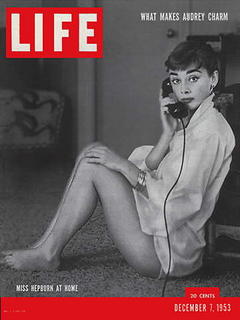
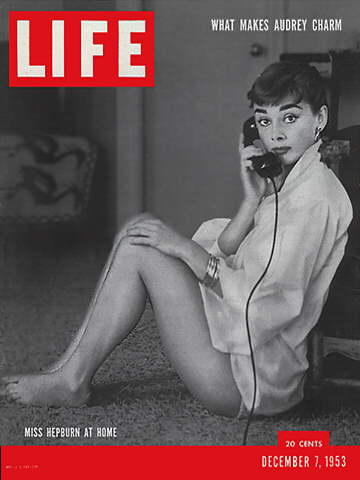
In September 1953, Mulligan was arrested for narcotics possession and spent the rest of the year in prison at the Sheriff's Honor Farm. During Mulligan's incarceration, Baker claimed the spotlight, essentially becoming the public face of the quartet on magazine covers and assembling a new quartet of his own.

So the desire for fame, resentment and greed took their usual measures. After Mulligan was released from jail around Christmas '53, Baker found him walking on Hollywood Boulevard and then and there demanded a pay raise to $300 a week from his current $125. Mulligan, who was trying to kick heroin, was currently unemployed, and still had the smell of prison on him, told Baker where to get off, and thus the quartet ended. (Soon afterward, Mulligan would leave the West Coast for good and move back to New York City.) Craig Hanley: "Ever since then, it is said that Mulligan always looked for more sensitive partners, who understood his passion, and did not go head over heels with money."

While they lasted, though, they were magnificent. Here are two remnants: the cool, beautiful "My Old Flame", recorded in Los Angeles on April 27, 1953, and a live recording of "My Funny Valentine", taped at the Haig on May 20, which is one of my favorite jazz tracks ever. As glasses clink and clubgoers whisper, a drumroll sets the group off, and Carson Smith's two-note bass vamp provides a tightrope, first for Baker, who gives one of his finest solos, and then for Mulligan, who seems to stop time for the duration of his message (there are some amazing passages--such as the sweet melody that starts around 3:25). Then Baker and Mulligan unite briefly for one last time; Baker closes it out by reducing the main theme to three terse notes.

Find both on Original Quartet.

"The scent and smoke and sweat of a casino are nauseating at three in the morning. Then the soul erosion produced by high gambling--a compost of greed and fear and nervous tension--becomes unbearable, and the senses awake and revolt from it."

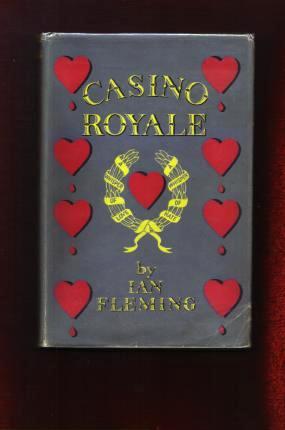
On April 13, 1953, the UK's Jonathan Cape published a novel by a first-time writer, Ian Fleming, which the Spectator's critic described as being "lively, most ingenious in detail, on the surface as tough as they are made and charmingly well-bred beneath, nicely written except for a too ingeniously sadistic bout of brutality." (i.e., a character gets whacked in the crotch repeatedly by a carpet beater.) While the book was a best-seller in England, it was rejected by every American publisher to whom Fleming's agent sent it, until at last Macmillan Publishing decided to take a chance on James Bond.

Tuesday, October 25, 2005

1953


triumph of the shabby man

Little Junior's Blue Flames, Love My Baby.
Little Junior's Blue Flames, Mystery Train.


Another rock & roll cornerstone: Sun 192, recorded in September or October 1953.

Herman Parker Jr. was born in West Memphis in 1932, just across the river from the future site of Sun Records. He began playing in Memphis in the late '40s, and took years to shake off the influence of Roy Brown and Sonny Boy Williamson (II) of whom he was a rank imitator for a while. He also began playing with the Beale Streeters, a sort of Memphis supergroup that featured on occasion Johnny Ace, Rosco Gordon and Bobby Bland. Parker formed the Blue Flames out of a faction of Howlin' Wolf's old band, and in 1952, Ike Turner, who served as a circulatory system for early rock & roll, helped organize "Little Junior" Parker's first solo session.

In '53, Parker recorded a handful of tracks for Sam Phillips--the first, "Feelin' Good", hit #5 in the R&B charts. Its follow-up, the amazing single "Mystery Train"/"Love My Baby", did nowhere as well, prompting a frustrated Parker to leave Sun and sign with Don Robey's Duke label.

But "Mystery Train" would linger in the air at Sun, until two years later, when another group would take a crack at it...

Little Junior's Blue Flames were Parker on vocals, Sun regular Raymond Hill and possibly James Wheeler on sax, Bill Johnson (p), Floyd Murphy (g) (Phillips later would tell Scottie Moore to play like Murphy on various Elvis tracks); Kenneth Banks (b) and John Bowers (d). Find here.

Thursday, October 20, 2005

1953


cornucopia on wheels


Carl Smith, Darlin' Am I the One.
Carl Smith, Hey Joe!


Carl Smith seemed to emerge in country music just as Hank Williams faded, indicating to some the rise of a more cosmetic and homogenized, less "rural" type of singer as the '50s went on. But naysayers should take a listen to "Darlin' Am I the One?" in which Smith delivers a sweet, classic country vocal, and then its B-side, the loopy, vowel-happy "Hey Joe!", a solid bit of rock & roll. (Boudleaux Bryant's lyrics are pretty hilarious too--"Now we'll be friends until the end/this looks like the end, my friend", Smith hoots, ready to poach his buddy's girl).

"Darlin'" was recorded on May 19, 1953 with Johnny Sibert (steel guitar), Sammy Pruett and Grady Martin (electric guitars); Velma Williams (rhyth. gtr), Hal Smith (b) and Gordon Stoker (p). I think "Joe" is from the same session but am not sure. In any case, both were released in July 1953 as Columbia 21119. Find "Joe" on Essential Carl Smith and "Darlin" on this box set if you want to spend an obscene amount of money on Carl Smith.

Monday, October 17, 2005

Paper Anniversary (1945-1953)


Dizzy Gillespie and Charlie Parker, Salt Peanuts.
Texas Ruby, Don't Let That Man Get You Down.
Joe Liggins, The Honeydripper.
Gene Krupa Trio, Dark Eyes.
Fred Astaire, Puttin' on the Ritz.
Sister Rosetta Tharpe and Marie Knight, Up Above My Head I Hear Music in the Air.
Hadda Brooks, That's My Desire.
Buddy Johnson and Ella Johnson, I Don't Care Who Knows.
Dexter Gordon and Wardell Gray, The Chase.
Pee Wee Crayton, Blues After Hours.
Delmore Brothers, Pan American Boogie.
Yves Montand, Rue St. Vincent.
William Faulkner, Nobel Prize Acceptance Speech.
Muddy Waters, Louisiana Blues.
T-Bone Walker, Strollin' with Bone.
Earl Bostic, Flamingo.
The Larks, Eyesight to the Blind.
The Boyer Brothers, Step By Step.
Ole Rasmussen and His Nebraska Cornhuskers, C Jam Blues.
Dizzy Gillespie, Charlie Parker, Bud Powell, Max Roach & Charles Mingus, Salt Peanuts.


A year ago, I started this semi-public habit with the hope of spurring myself to write more, for lack of a better phrase, "creative" work. I have long had a tendency to begin projects and then happily abandon them, and so I thought a minor degree of self-publishing would boost my weak work ethic. What I failed to anticipate is how this blog would become about as consuming as my paying work, all while the long-awaited creative writing remains mostly stillborn.

For the most part, I'm fairly happy what I've put up, though there are exceptions--dud entries, uninspired song choices. I've also wanted to be funnier--there's a certain ponderousness to this project that I'd like to shake.


What else? After a solid start, there have been far fewer "classical" pieces than I expected to offer, but I found it hard to incorporate, for example, an aria from a Britten opera into a run of R&B/country posts. There have been hardly any Broadway songs, which is a shame, as the 15 years after WWII were a golden age for musical theater. My attempts at exploring non-US music have been mainly confined to the French at the expense of the rest of the world. Ah well.


So: onward. For a bit longer. I first considered starting with the year 1900 and running the whole 20th century, but I had neither the stomach nor the record collection to do the first quarter of the century any justice. So I felt 1945 was a good compromise, as it was Year 1 in several senses--musically, as it was the start of bebop, honky tonk and R&B; and culturally. 1945 was when a new world began; a world that, increasingly so over the past five years, seems to be dead and gone.

We're living in a different clime now, and this blog, if it has done nothing else, has tried to show just a bit of what's been bequeathed to us by persons already lost to memory.

Nine years


Here is a heap of songs from the '45-'53 period:

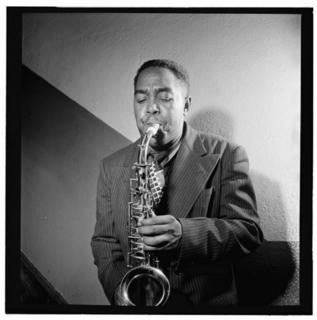
1945: The Parker/Gillespie performance of Gillespie's "Salt Peanuts" is from the newly-discovered Town Hall concert, recorded on June 22, 1945--little more than a month after the definitive studio version of "Peanuts" had been recorded. This finding is pretty amazing, as no live recording of Parker and Gillespie from this period (especially in this type of quality) was believed to have existed. It's like discovering a lost Annal of Tacitus, a missing Patrick Troughton episode of Doctor Who. Buy this essential disc.


Texas Ruby came from the Texas plains and she never shook off the grit. Find "Man" here.

I put up Joe Liggins' "The Honeydripper"--ground zero of postwar R&B--early on, when about eight people read this blog, and have had some requests for a repeat. This is actually an alternate version, either a different take or edit, in which the vocal refrain starts far earlier. Liggins' best.

Gene Krupa, Benny Goodman's former drummer turned bandleader, was catching hell from his big band in the studio one day--the strings and brass players were griping about pitch problems. Finally Krupa, disgusted, sent everyone home but the pianist Teddy Napoleon and tenor saxophonist Charlie Ventura. Then the three recorded "Dark Eyes". More Krupa than you'd ever need.


1946: Fred Astaire first recorded the original version of Irving Berlin's "Ritz" (with references to Harlem, Lenox Avenue and "high browns" walking around) in 1930; here is a bowdlerized version in which the action has moved downtown to Park Ave. From the '46 film Blue Skies, which is pretty lousy. On this great Astaire comp.

1947: Sister Rosetta Tharpe and Marie Knight were gospel singers with the urge to make R&B records: "Up Above My Head," in which the Holy Ghost is seemingly captured on record, is one remnant of their journey. The women start out hearing music above them, but in the second verse, it becomes the far less comforting "trouble in the air". Like Tharpe's "Strange Things Happening Everyday," it's a sign of apocalypse set to a joyful tune. On Gospel of the Blues.

That's her desire, and who could've turned Hadda Brooks down? Not me. Brooks, a brilliant vocalist and pianist, as well as a knockout, is woefully neglected today. Get to know her.

Buddy and Ella Johnson were siblings: Buddy provided the songs, Ella was their ambassador. They would play together for decades--listen to more on Jukebox Hits.

Dexter Gordon and Wardell Gray's saxophone duel "The Chase" is one of the extraordinary jazz recordings of the postwar years, worshipped by Kerouac and Neal Cassady, and neglected by Locust St. at the time because I thought I had lost my copy of it. But lo and behold, while moving house I found, in a box full of jaundiced newspapers, my copy of an old compilation LP called "Jazz in Revolution". Moving has its few consolations. You can find "Chase" on CD here.

Brief roadmap, for those interested in this sort of thing:
16-bar intro, 32-bar main theme: everyone.
Solo choruses (all 32-bar): 1st: Gordon; 2nd: Gray; 3rd: Gordon; 4th: Gray; 5th: Jimmy Bunn (p); 6th: Gordon.
8-bar exchanges: Gray; Gordon; Gray; Gordon.
4-bar exchanges: Gray;Gordon (repeat 3x).
Final chorus (4-bars each) : Gordon/Gray unison; Gordon; unison; Gray; Gordon; Gray; unison;Gordon.
Theme recapitulation--everyone (w/Bunn on middle eight).


1948: The guitarist Pee Wee Clayton's "Blues After Hours": the sound of an ebbing summer night in a club long lost to time. On Modern Legacy Vol. 1.

1949: In his autobiography, Alton Delmore recalled the Delmores' first recording session, when the brothers heard their voices played back for the first time. "There was something divine in that little can...that helped us immensely and changed us from two country farm boy singers to something 'up town' and acceptable to listeners...that was the whole secret of our good luck. Our voices took well to the microphone." Find "Pan American Boogie" here.

1950: Yves Montand's "Rue St. Vincent" was one of the countless recordings Montand made in the '40s, '50s and '60s that became, in common, an alternate history of France, a grand suggestion of life. It wound up in Wes Anderson's Rushmore: Max Fisher ineptly attempts to seduce his dream crush, Miss Cross, while Montand purrs away in the background, oblivious.

Faulkner, having won the Nobel Prize in 1949, gave the following speech in Stockholm on December 10, 1950. (The idea of Faulkner wandering the streets of Stockholm is pretty hilarious--I'm surprised no one's done anything with the idea). "I decline to accept the end of man."


"Let's go back to New Orleans, boys." Muddy Waters' "Louisiana Blues" is on Anthology.

In "Strollin' with Bone", T-Bone Walker takes on a hot R&B band and wins. Around 1:15 into the song, he creates a Chuck Berry riff and moves on. On Blues Masters.

1951: Earl Bostic was the sort of loud, big-toned, vulgar saxophonist that jazz fans of the '50s simply hated, especially because Bostic got jukebox hits, like "Flamingo", while the likes of Lennie Tristano remained in obscurity. One of the last jazz musicians whose primary emphasis was keeping dancers on the floor, Bostic is what he is--pure buzz-toned entertainment. More on this 2-CD retrospective.

The Larks' "Eyesight to the Blind": in which a fallen gospel group transmogrifies a Sonny Boy Williamson blues into vicious doo-wop. Find here.


1952: "Step by Step" was the first record issued on Nashville's Excello label, which started out releasing gospel sides and wound up becoming a R&B/soul factory. The Boyer brothers were high school pianists from Winter Park, Florida; I don't know what became of them after this record, but I thank them for it--it's beautiful. On Excello Story Vol. 1.

Ole Rasmussen was a Swede from Nebraska who became, for a brief moment, the greatest Bob Wills imitator in the world. He stole everything--Wills' trademark asides and "yeah!s"; his singer was a clone of Wills' Tommy Duncan, his slide player a cut-rate Leon McAuliffe. But sometimes Ole blew past his limitations: his version of Duke Ellington's "C Jam Blues" is his finest record, the type of wild fusion of jazz, blues and country that was just about to become extinct. On Sleepy Eyed John.



1953: At last, we come full circle with "Salt Peanuts", this time at Massey Hall, Toronto, on May 15, 1953. Where to hear the Town Hall show in 1945 is to be present at the creation, hearing the Massey Hall concert is to witness the late autumn of bebop--a summing up of glories.

For some (the up-and-coming Charles Mingus, who organized the show and taped it, and Max Roach, who would persevere in excellence for years to come), the show was just another milestone, but for Parker, it was close to the end--this would be his last great performance before his death in 1955. Bud Powell, increasingly in ill health, was spiraling downward as well, while Gillespie, his greatest work behind him, would move on to become a genial jazz statesman, whether on a government-sponsored tour of South America or The Cosby Show.

It was, from all accounts, a mess of a concert--the hall was half-empty because of a prizefight occurring at the same time; Gillespie and Parker almost missed the show due to an overcrowded plane; Parker showed up with only a plastic white saxophone. Still, the music this once-in-a-lifetime quintet made for a half-hour in Toronto that night was astonishing and vital--the sound of titans.

(That said, the recording of the Massey Hall show was muddy and weak, causing Mingus to overdub his performance in the studio later--thus, this is not a pure document of the concert. But what recording of a live show ever is, really?)


Is Bird's intro to "Peanuts," in which he calls Gillespie his "worthy constituent", a tribute or a veiled insult? On Quintet at Massey Hall.

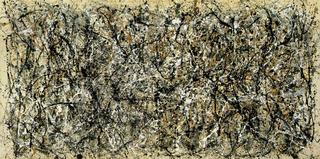
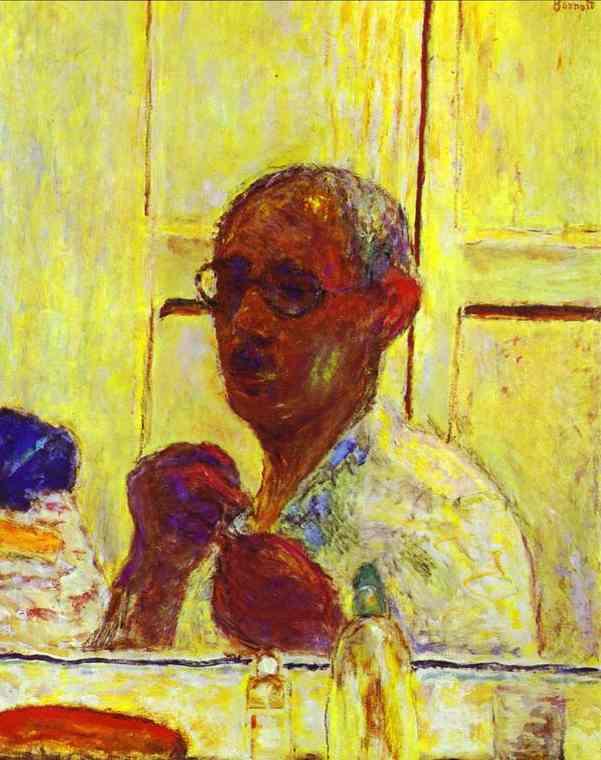
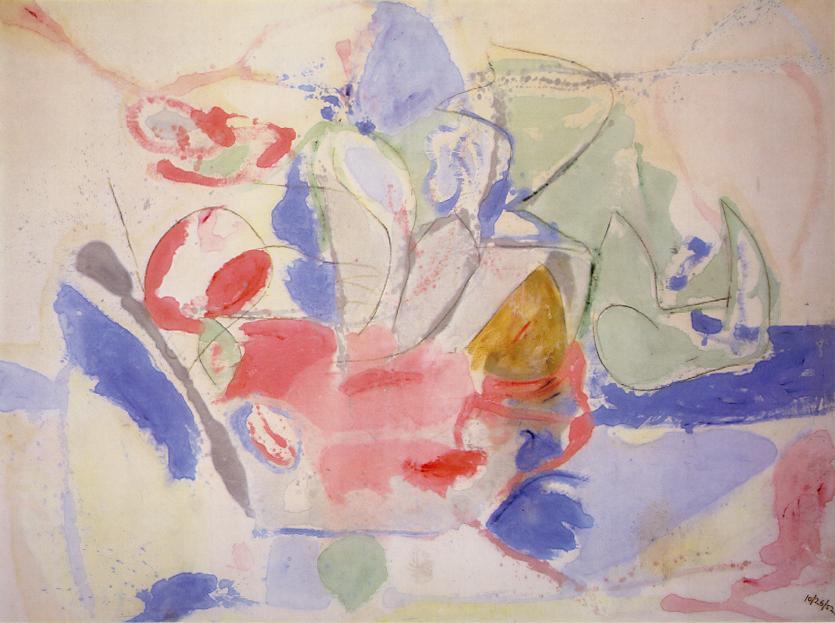
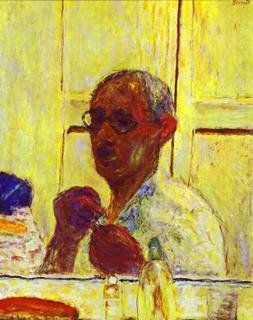
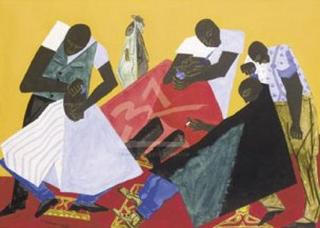
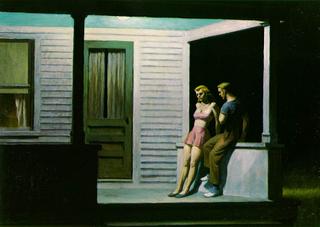
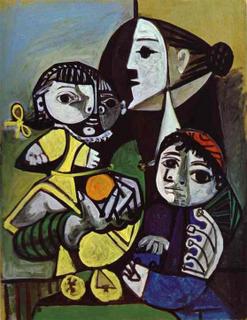
Paintings: Pierre Bonnard, Last Self Portrait (1944-45); Jacob Lawrence, Barbershop (1946); Edward Hopper, Saturday Night (1948); Jackson Pollack, No. 31 (1950); Pablo Picasso, Françoise, Claude y Paloma (1951); Helen Frankenthaler, Mountains and Sea (1952)
.

Etc.


More people visit this site because they're looking via Google Images for pictures of Saul Bellow, Hank Williams, "Cosmopolitan" and "The Third Man" than for any other reason. Hope I helped.

Thanks to: Tofu Hut, Soul Sides, Honey Where You Been So Long and Moistworks, which were my impetus and which remain the best of the lot; The Mystical Beast (apparently soon to be retiring, sadly) and Norwegianity who have said some kind things about this site over the months; Big Rock Candy Mountain, the Reverend Frost's Spread the Good Word and Kat's Keep the Coffee Coming, which have been my biggest referrers and some of my favorite sites. Fine new blogs like Long Sought Home. And the rest of you on the blogroll and beyond.

Top countries, in terms of visitors: US, UK, France, Germany, Canada, Netherlands.

Countries whose residents have only visited here once during the year: Ghana, Iraq, Ecuador, Pakistan, Kazakhstan, Albania, Bahrain, Belarus, Bulgaria, Morocco. Also, one time someone from "Europe".

Thanks for coming.
Wednesday, October 12, 2005

1953


Ray Charles, It Should've Been Me.
The Drifters, Money Honey.


The rock & roll attitude at birth. Both records, Ray Charles' and the Drifters' first major hits for Atlantic, share a new sensibility--brash and cocksure; the singer's a bit full of himself, and full of jive. A nation of impending teenagers awaited instruction--here are the first marching orders.

The first time I heard "It Should've Been Me," I (and my friend) thought Ray was singing, "It should've been me--with that real white chick." Ray hasn't found his mature style yet--this track is still heavily under the influence of Louis Jordan--but it's a hoot all the same. Recorded on May 17, 1953 and released as Atlantic 1021. On The Birth of Soul.

The Drifters had two main incarnations--the world (or at least the oldies stations) favors the more genteel Ben E. King version, but this is the frantic, brassy Clyde McPhatter edition of the early '50s. The singer's got troubles with his girl, his landlord and the world, in that order. Recorded August 9, 1953 and released as Atlantic 1006; it can be found on Atlantic R&B Vol. 2.

Monday, October 10, 2005

1953


J.J. Johnson, Turnpike.

In 1952, J.J. Johnson, the great bebop trombonist, accompanist to Count Basie and Benny Carter, was working in a Sperry Gyroscope factory inspecting blueprints.

The early 1950s was a sere time for jazz musicians: the big bands were through; Miles Davis, along with dozens of others, was sidelined by heroin; Charlie Parker was fading. Even Frank Sinatra was in limbo. Johnson, always a cautious family man at heart, opted to take a regular paying job.

But luckily he kept his affiliation with Blue Note Records and in 1953, things began to turn. Davis, a friend, had called up Johnson for a session in April, during which Davis recorded two Johnson compositions. Intrigued, Blue Note arranged Johnson to have his own session as a leader.

Call it kismet or simply evidence of the sheer number of top players available for sessions in those days, but Johnson's solo recording date in June featured an amazing collection of talent: the bright young trumpeter Clifford Brown, making only his third-ever recording session; the pianist John Lewis, who was in the process of assembling the Modern Jazz Quartet; the brothers Jimmy and Percy Heath (sax and bass, respectively); and the bop veteran Kenny Clarke on drums.

"Turnpike," a Johnson composition, features a startling, ominous introduction and a driving two-note theme reminscent of Thelonious Monk. The 22-year old Brown starts off the solos, sounding like he has been playing for decades, then comes Heath on tenor sax. Johnson's trombone solo is masterful--he moves as lightly as Brown did on the trumpet.

Recorded on June 22, 1953, in New York, and available on J.J. Johnson: The Eminent Vol. 1.

Wednesday, October 05, 2005

1953


trade paper immortality

Johnny Ace, Still Love You So.

This, a posthumous release for Johnny Ace in 1956, was actually recorded three years before, in the midst of Ace's rapid upward trajectory. In early 1952 Ace was a minor regional musician known mainly in the Memphis area; two years later, he had become a national name, his records promoted by Alan Freed, and he was set to be one of the first great rock & roll figures.

Then he accidentally killed himself playing Russian roulette backstage at a 1954 Christmas show in Houston. Along with James Dean's death in 1955, this would inaugurate the run of great pop star death worship cults, which would devolve, as the years went on, into the various sects of Paul is Dead and Jim Morrison is Alive and Elvis has Risen Again, down into the Cobain and Shakur manias of the past decade.

Johnny Ace recorded a mere 21 tracks during his brief life--"Still Love You So" (recorded in August 1953 but released as Duke 154 in 1956 as Ace's last-ever single) is one of his finest, a moody record sung hypnotically. On Memorial Album.

As a kid reviewer on Amazon put it, "I wish he made more music and I wish he didn't die."

Monday, October 03, 2005

1953


Bud Powell, Autumn in New York.

Summer is miserable--a guest who, after a joyful arrival, stays far too long, ruining the house, making you antsy. Spring is more hope than reality, crystallizing just long enough to bring out the allergies. Winter beats you down and leaves you flat. But the autumn, the autumn, is perfect.

Anthony at the Hype Machine asked me recently if I missed New York. "Sometime, not all the time," as Dylan once said. But, yes, I miss it greatly in October.

Bud Powell's take on "Autumn in NY" was recorded in New York on August 14, 1953, with George Duvivier (b) and Art Taylor (d). On The Amazing Bud Powell Vol. 2.

Thursday, September 29, 2005

1953


"Elmore James has got nothing on this baby"

Elmore James, Please Find My Baby.
Elmore James, Hawaiian Boogie.


A taste of Mr. James in his prime.

As a child, Elmore James, born in 1918 in Richland, Miss., hammered a strand of broom wire to a cabin wall and taught himself to play what he called "the diddley bow". By the 1930s, he was playing the Southern blues circuit, a journey in which he met Robert Johnson and Sonny Boy Williamson. For years, James was known throughout the South as the man who took Johnson's "Dust My Broom" and radicalized it--turning Johnson's original riff "into a heavily amplified banshee wail" (Robert Palmer). James finally recorded "Dust My Broom" in 1951, in his first-ever session.

By '53, he was churning out singles. "Please Find My Baby" is a rip-roaring masterpiece, whose vicious guitar sound would be aped for decades by everyone and their mother--Mike Bloomfield, Led Zeppelin, the Allmans, Stevie Ray Vaughan, etc., etc. (Riffs from the actual James recording were dubbed onto Boyd Gilmore's 1952 "All in My Dreams", in a bit of ur-sampling.) James' guitar was recorded loud and raw under primitive conditions in a Jackson, Miss., juke joint--basically, a Modern Records talent scout hooked up a portable Magnacord tape recorder to the bar's PA system.

"Hawaiian Boogie", in which James' slide seems to be not so much imitating a Hawaiian guitar as remaking it in the slide's own image, stalls for a bit while we endure the fairly mediocre solo by tenor saxophonist J.T. Brown, but when James takes over for good, the track cooks.

"Hawaiian" is backed by Johnny Jones (p), Ransom Knowling (b), Odie Payne (d) and J.T. Brown (ts). Recorded in Chicago; released as Flair 1011 in June 1953. "Please Find" features Ike Turner on piano and an unknown rhythm section--it was released as Flair 1022 in December 1953. Both are on the amazing compilation The Sky is Crying.

Tuesday, September 27, 2005

1953


duded up for trouble

Chet Atkins, Country Gentleman.
Earl Hooker, Guitar Rag.


All hail the electric guitar! Here are two masters from the second generation of players--the country session man genius Chet Atkins, disciple of Merle Travis, and the blues slide guitar legend Earl Hooker, first cousin to John Lee Hooker and protégé of Robert Nighthawk.

Atkins, born in Luttrell, Tennessee, already has been heard a half-dozen times or more on "Locust St." as he played guitar on seemingly every country session of note from @1948 onward. Atkins played fiddle about as often as he did guitar, but the latter instrument made him immortal. Atkins' playing owes a lot to Travis', but with far more sprightliness to his playing--the way "Country Gentleman" just cleanly hums and jumps along. His style would inspire contemporaries like Carl Perkins, and would be a seminal influence on George Harrison, among others (the first five Beatles LPs are riddled with Harrison's Atkins imitations).

"Gentleman" was recorded in New York on March 20, 1953, with Henry Haynes on rhythm guitar, Kenneth Burns (who gets a solo on mandolin) (under the names Homer and Jethro, these two later became a comedy team) and Charles Grean (bass.) Released as Victor 20-5300. On Guitar Legend. This song led to Gibson creating a guitar in Atkins' honor.

Earl Zebedee Hooker was born in Clarksdale, Miss. in 1930 and moved with his family to Chicago as the Depression worsened. In Chicago, Hooker saw the likes of Tampa Red, Big Bill Broonzy & Robert Nighthawk--the latter mentored Hooker, who in turn was soon able to perfectly imitate Nighthawk's smooth slide guitar playing. Hooker returned South in the early 1950s, playing with Ike Turner and cutting some sides for Sun Records that Sam Phillips never released. Hooker spent much of the decade constantly touring, providing slide guitar on some epochal records like Muddy Waters' "You Shook Me", and only recording a few one-off singles of his own.

"Guitar Rag," possibly recorded in July 1953, is a marvelous display of Hooker's style, though the mix oddly highlights a dire performance on bass by some incompetent who history has blessed with anonymity (check out the massive screw-up around :45 into the track). On Two Bugs and a Roach.

Tuesday, September 20, 2005

1952


Rosemary Clooney, Don’t Worry ‘Bout Me.
Kay Starr, Wheel of Fortune.


Popular music of the early 1950s, if it is considered at all today, is remembered mainly as a foil for rock and roll; described in turns as dreary, confectionery, cloying and irritating, pop hits of the early fifties have long been sloughed off into oblivion, returning only once in a while in muzak garb on "easy listening" radio stations or whistled by a grandmother in the kitchen.

Certainly, a good deal of it was dreck: Carleton Carpenter & Debbie Reynolds singing “Aba Daba Honeymoon”; Reynolds’ future husband Eddie Fisher inflicting a host of wretched songs upon the airwaves, like “Lady Of Spain”; Patti Page’s “How Much is that Doggie in the Window”, which has become over the years the embodiment of the insipid type of music rock & roll allegedly destroyed.

Yet there was something else to these songs besides their grandiose melodies-- a shared sense of melancholy, a taste for desperate escapism, sometimes undercut by a sort of domestic stoicism. In great part these were songs for women, often performed by women, and whenever such songs are prominent, the period gets written off by (mostly male) writers of future generations as being weak, sappy and requiring rock & roll demolition. The same critical revision happened to the early '60s, when the girl groups ran the show (i.e., rock & roll had "died" and needed resuscitation by the Beatles); it likely is underway right now with regards to the late 1990s, when the charts were dominated by boy bands and former Mouseketeers, crafting songs for teenage girls, diluting and mocking the High Painful Seriousness of the grunge era.

In his marvelous book Sonata for Jukebox, Geoffrey O’Brien describes what it was like to be a child in the '50s hearing these songs, and what they meant to the older women in his house:

Ruth undertakes her meticulous work of arranging and folding and dusting accompanied by Perry Como and the McGuire Sisters and the Mills Brothers arranging and folding sound, as if to keep the whole enterprise moving forward. It seems that the music has been made for her and if whenever one song happens to suit her even better than the rest of them it’s an occasion for gratitude: a song like that is a token of mutual assistance… Love and Marriage, Cry Me a River, Sentimental Journey, Three Coins in the Fountain, Rags to Riches, Music Music Music: these are pieces of an unending cycle of story poems, an opera without boundaries or fixed roles that has been unfolding since before I was born and will keep playing until I figure out what they are singing about… Now and then an isolated phrase stands out. The turning of Kay Starr’s “Wheel of Fortune” mesmerizes even while its function remains unknown.”

Starr's "Wheel of Fortune" is still mesmerizing, especially the spooky, revolving harmonies in the chorus ("spinning, spinning, SPIN-ning"). Find it here.

The audience for this music was not a typical one-–these were women who had come of age, as my grandmother did, at the height of the Depression, who had spent their prime years during the war, working, fearing for their boyfriends, husbands and brothers, sometimes losing them. It was a generation deprived of its youth, in the postwar sense of the word--whatever carefree moments you had, you earned.

Rosemary Clooney, having grown up during the war, was now off on her own, still keeping the faith although the guy she was waiting for proved to be a waste. "Don't Worry 'Bout Me", a breakup song of amazing grace, humanity and wistfulness, documents resilience in the face of disappointment, provides a cheerful delusion (the singer graciously tells her lover move on to another woman) to cover the loss. Clooney sings the first bars of each verse with strength but then lets the rest of the phrase taper off--she's regretted her words as soon as she's sung them. Found on Everything's Rosie, an odds-and-ends '50s compilation.

By 1952, the great travails were over, the men had returned (even Korea, the miserable coda to WWII, was winding down), the children were coming--for many of these women, their prayers during the hard years had been answered. All that was left now was to grow old--happily for many, dismally for some--while the songs would be always there to remind them of all they had lost. And then, one day, the songs would go too.

(for HBM, 1914-2001.)


Willie Mabon, I Don’t Know.


In the 1952 presidential election, the Republicans retook the White House after two decades of losses, thanks to their choice of Gen. Eisenhower over someone who better represented the soul of the party, the conservative Sen. Taft. (As a sop to the right, Ike chose for his running mate an ambitious Congressman who had cut his teeth red-baiting.) Eisenhower, the sort of ideologically blank candidate that turns up on rare days to the great benefit of his party and occasionally of his country, was the last (to date) of the lineage of great American generals who devolved into mediocre presidents. That said, Eisenhower ran the country like a genial corporate chairman: he mainly left FDR/Truman reforms alone; he pushed to build the interstates and backed up Brown v. Board of Education with federal troops. He was honest, not vindictive and knew a snake (McCarthy, Nixon) when he saw one; he ranks in the top tier of 20th Century presidents, if elevated more by his competitors than by his actions.

He crushed Adlai Stevenson, first in the long line of Democratic presidential candidates considered by voters to be essentially too qualified for the job.

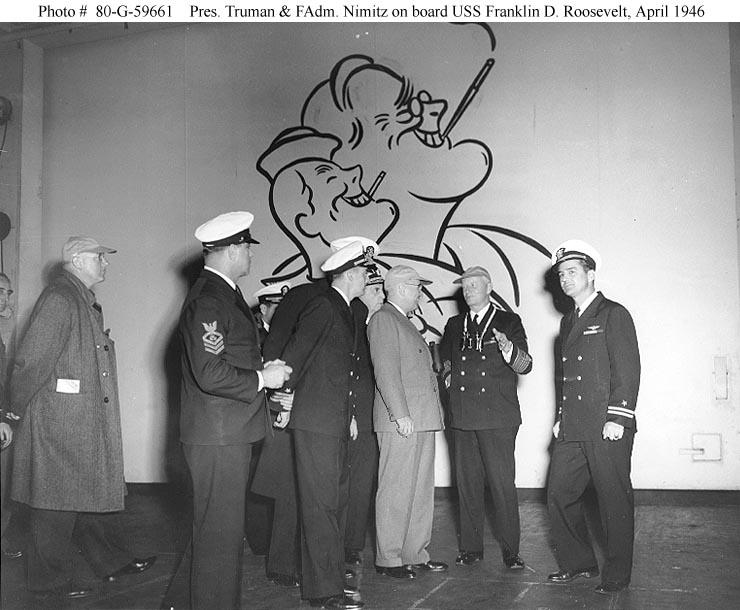
Harry Truman went home to Missouri, hated by a great many of the American public, who, in later, darker years, would remember him with much more fondness (one great aunt of mine told me once, in the '80s, "You know, President Truman wasn't as stupid as he made out to be.")

I think Willie Mabon would have voted for Stevenson. On the Chess Blues-Rock Songbook.


Films of 1952

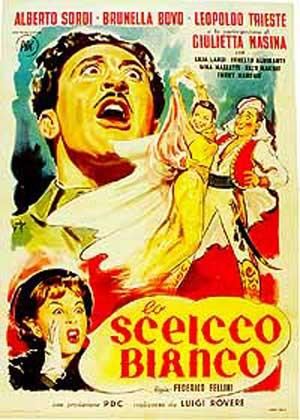
Lo Sceicco Bianco (The White Sheik). Others may favor Fellini’s extravagant later epics like 8 1/2 but for me his masterpieces are his first two films, this and '53’s I Vitelloni, where his baroque taste for fantasy is tempered by the grime of real life. Funny, heartbreaking and marvelously acted.
Le Plaisir. Soon, the complete run of "Three's Company" will be available on DVD, but not any of Max Ophuls' great films. Plaisir, which starts with one of the most amazing continuous shots ever achieved, is a collection of three vignettes; it achieves perfection with the longest, a story of a group of prostitutes and their madam going on holiday in a small country town.
Singin’ in the Rain. This, along with '53's The Band Wagon, marks the end of the great Hollywood musicals. I mean, come on, who doesn't like "Good Morning"? Or Donald O'Connor's astonishing "Make 'Em Laugh" (which landed him in the hospital for a week after he did it, and then he had to do a re-take)? Or the title song? It's a Russian nesting doll of a movie--a film about actors remaking and redubbing a film (Debbie Reynolds' dubbing work being in turn dubbed by another singer), in the midst of which Kelly imagines another surreal film sequence (the "Gotta Dance"/Cyd Charisse bit, which almost destroys the movie).
Ikiru/Umberto D. The timing of these films’ release (just ten months apart) makes one believe coincidence has some divinity to it. Two studies on death and obsolesence; the Kurosawa film offers release, the De Sica despair.
Jeux interdits.
Outcast of the Islands.
Bend of the River/The Big Sky. Both more satisfying '52 Westerns to me than High Noon, a film I've never liked.
The Bad and the Beautiful. A Hollywood epitaph that reeks of wormwood; it begins with Kirk Douglas paying extras to show up at his father's funeral.
The Lusty Men. Mitchum. Nicholas Ray. Enough said.
Park Row.
Ochazuke no aji (The Flavor of Green Tea Over Rice). Minor Ozu, sure, which is like saying “minor Shakespeare.”

Oddities: My Son John. I saw a bit of this film years ago, on a terrible quality VHS bootleg. As many have said, it is to anti-Communism what "Reefer Madness" is to marijuana use. Unbelievably bad but marked with an inadevertant gonzo genius, and a sad depiction of Hollywood's paranoia/cowardice in the face of HUAC.

Wednesday, September 14, 2005

1952


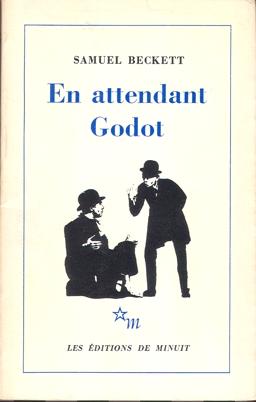
VLADIMIR: Then the two of them must have been damned. ESTRAGON: And why not?

Hank Williams, I’ll Never Get Out of This World Alive.
Lefty Frizzell, I’m an Old, Old Man (Tryin’ to Live While I Can).


The end, when it came, was ridiculously legendary. Sitting in the back seat of his baby blue Cadillac, a bottle of whiskey by his side, Hank Williams died either on New Year’s Eve 1952 or in the early hours of 1953. Before he had left his hotel in Knoxville, Tennessee, Williams had been shot up full of vitamin B12 and morphine; when his teenage driver Charles Carr stopped for gas in Oak Hill, West Virginia, Williams was already dead.

(The true cause and time of his death remains still a conjecture; some speculate he may have been dying when the porters carried Williams into his car in Knoxville.) Williams' last single released during his life was “I'll Never Get Of This World Alive," recorded in June '52. Find it here.

Williams’ death removed the center of country music, which no one in the years to come could quite replace. You can speculate what would have happened had Williams lived – would he have gone towards rockabilly, trying to get a piece of what Elvis Presley was making? Or would he have entrenched in Nashville, making soporific professional "country pop" records like many of his contemporaries would do? Perhaps he would’ve made some squirrelly novelty records, themes for television shows. Or just fully adopt his "Luke the Drifter" persona and travel around playing revivals or county fairs. At each show someone in the audience would recognize his face--as the years went on, they would be unable to place his name.

There was an heir apparent. When Lefty Frizzell and Hank Williams toured together, they would flip a coin each night to see who went on first. Frizzell seemed ready for fame--since 1950, he had begun pumping out hits: “If You’ve Got the Money, I’ve Got the Time”, “I Love You a Thousand Ways”, “Always Late With Your Kisses”. He would buy a Cadillac, drive it until it ran out of oil, and then buy another one. He had an unmistakable voice, inspired by Jimmie Rodgers but flavored with his own stylings (“I get tired of holding high notes for a long time. Instead of straining, I just let it roll down, and it feels good to me,” Frizzell once said).

Yet when Williams died, Frizzell began falling apart— too much booze and pills, some disastrous career moves. By 1954 the hits had stopped, and when Frizzell died of a cerebral hemorrhage in 1975, it marked the end of a brilliant but ultimately unfulfilled career.

“I’m an Old Old Man”, recorded on October 7, 1952, shows Frizzell already accepting premature fatality. On this compilation.


At long last, 1952 is ending. One big last post coming end of week or early next.

Wednesday, September 07, 2005

1952


The spoils of the just

Jim and Jesse and the Virginia Boys, Are You Missing Me?
The Louvin Brothers, The Family Who Prays.

In September 1952, a pair of itinerant musical brothers began recording for Capitol Records, marking the end of the pair’s years in the wilderness. When their first Capitol single, “The Family Who Prays,” actually earned them a substantial royalty check, the brothers were scared to cash it at first, fearing their record company had made an accounting error.

Ira and Charlie Louvin were born under the name Loudermilk, which they changed around 1947 due to the musical public's general inability to spell or pronounce the name. The brothers grew up in Alabama and were inspired by the spate of brother acts dominating the ‘30s country music scene, such as the Monroes, the Blue Sky Boys, the Delmores and the Carlisles. Ira learned to play mandolin and taught his brother on guitar.

Much as when Roger McGuinn and David Crosby stepped out of a movie theater playing A Hard Day's Night set on becoming pop stars, the Louvins saw Roy Acuff’s huge touring car burning down the road (on the way to a show the Louvins could not afford admission to) and determined to make a career in country music.

The '40s, however were a rough time--the brothers played the ragged edge of the southern touring circuit, never getting any breaks, and split up a few times, such as when Charlie joined the army in 1945. Yet they began to progress, getting a name for themselves first as songwriters. Because their lyrics and sound were far more traditional than the type of commercial honky—tonk fare then getting radio play, Louvins compositions instead found a home in bluegrass.

The Louvins' “Are You Missing Me?” is here covered by another brother act—Jim and Jesse McReynolds. The McReynolds began their professional career in 1946 and soon decided to cast their lot with bluegrass, adding a five-string banjo to their guitar/mandolin lineup hoping to achieve a similar sound to that of Earl Scruggs. Recorded on June 13, 1952 and released as Capitol 2233.

By contrast, “The Family Who Prays” seems more modern, despite the traditional lyrical sentiment, as it features top Nashville session men like Chet Atkins on guitar and Floyd “Lightning” Chance on bass. Recorded on September 30, 1952 and can be found on this compilation.

Thursday, September 01, 2005

1952


the be-bop boy takes five


James Banister, Ain't Gonna Tell You No Lie.
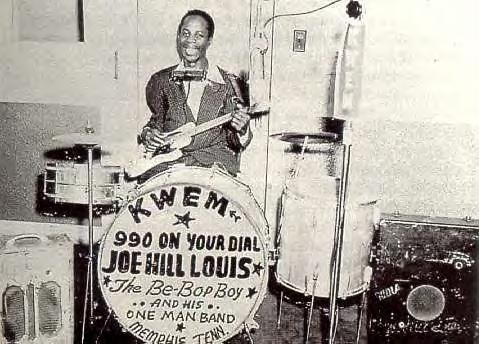
Joe Hill Louis, Dorothy Mae.
L.C. Hubert, Lucy Done Moved.
Willie Nix, Bakershop Boogie.
Woodrow Adams, Train Time.
Elven Parr & the In the Groove Boys, I'm a Good Man.
Walter Horton, Little Walter's Boogie.


Rock & roll, like a medieval cathedral, is the work of anonymous craftsmen spread over the generations. Here is a slab of blues/rock recordings made in Sam Phillips' Memphis studio during 1952--none from any bluesman who made it big in any commercial sense; for most of them, these records were the high-water mark. Most were unreleased, some the product of a whim--a journeyman drummer's desire to sing; someone trying to give their trombone-playing cousin a break; a few traveling players coming together for a day or two, trying to find a sound.

Consider these tracks a substratum of R&B and rock--the fruit of musicians who had a few good songs in them, who put them on tape or acetate disc during a few afternoons in Memphis, and then vanished into the ether. These are their rocking epitaphs.

James Banister, who drummed with the Red Devils, a Chicago R&B unit, cut only one track at Sun: "Ain't Gonna Tell You No Lie", which was recorded on May 3 and never released. Banister allegedly became a minister by decade's end.

L.C. Hubert is a ghost--aside from having appeared on a few Howlin' Wolf sessions and having recorded "Lucy Done Moved" on June 14 (never released), there is nothing else known about the man.

Willie Nix's "Bakershop Boogie", recorded on October 9, was released as Sam Phillips' second single, Sun 179. Nix, a drummer, made a local name for himself and moved up to Chicago in 1953, but returned south in 1958, possibly to face a murder charge (he apparently was either never charged or was acquitted). He died in 1991.

Woodrow Adams, another cipher, recorded "Train Time" on May 24. It was never released.

Joe Hill Louis' "Dorothy Mae", recorded on July 18, was released as Checker 763. The brilliant Louis, born in 1921 in Whitehaven, Tennessee, supported himself doing odd jobs--at work he cut his thumb and died of tetanus in 1957.

Elven Parr's In the Groove Boys hailed from Osceola, Arkansas--Albert King was their singer for a time. On "I'm a Good Man", recorded on April 16 and never released, pianist Eddie Snow sings. Little if anything has been heard from Snow or any other of the Groove Boys since the Eisenhower years.

By contrast to most of these musicians, Walter Horton had a long and vigorous career. Born in 1917, Horton claimed to have recorded for Vocalion in the 1930s, though no evidence has turned up, and by 1952 he was travelling around the South, playing picnics and fishfries. "Little Walter's Boogie" is just one of the brilliant recordings he made for Phillips (and for which Phillips paid him $59 in total). Horton went up to Chicago and eventually played with Muddy Waters and Otis Rush. He died in 1981.

All these tracks can be found on Sun Records: The Blues Years, a fantastic 8-CD set that is now long out of print. Some of them are on this compilation.

Tuesday, August 30, 2005

1952


Gerry Mulligan/Chet Baker Quartet, Lullaby of the Leaves.
Gerry Mulligan/Chet Baker Quartet, Soft Shoe.
Dave Brubeck and Paul Desmond, You Go to My Head.

“Cool” jazz, or "West Coast Jazz", like most subheadings in music histories, is an overly vague and at times inaccurate term--the only things cool jazz musicians had in common is that they recorded on the West Coast in the fifties, usually for the handful of local independent labels (Fantasy, Pacific) that emerged around the same time; they were mostly white; and their music often forsook blues standards and influences and the frenetic pace of bebop, pushing instead for clarity, quiet intensity and melody.

The core cool jazz records were recorded in just a few years, the early to mid-'50s, and the style soon congealed into a cliché. Think of the hep cool jazz band in 1957’s The Sweet Smell of Success, who already seem to be a parody – wearing sunglasses indoors at night, watching only themselves not the audience, immaculately dressed in matching suits, playing moody, spare music tailor-made for someone's quiet breakdown. Cool jazz devolved into music for the LP age, for the archetypal '50s swinging bachelor, with his wet bar, hi-fi set and Playboy subscription.

Still, long before its current incarnation as incidental music for Starbucks barristas, cool jazz was at its peak the hippest thing in the United States. This was music for, if not the future, then at least the present; urban, disaffected sounds--no more renditions of corny stuff like “When It's Sleepy Time Down South," or “Rocking Chair” or warhorses like "After You’ve Gone". It was not frantic music, it was not four-to-the bar, brass-heavy stomp crafted to be heard over the din of a loud dance hall (the dance halls had all closed anyhow)–it was music to be played, as James Baldwin wrote in Another Country, after all the squares had gone home.

Ted Gioia: cool jazz had “an acute sensitivity to instrumental textures; a studied avoidance of the easy licks and empty clichés of bop and swing; in their place, fresh, uncluttered lines, cleanly played. And above all, the band overcame the jazz musician's greatest fear: the fear of silence.”

When the 1950s began, Gerry Mulligan, the baritone saxophonist who had first made his mark with the Miles Davis Nonet in the late '40s, was hitchhiking his way from New York to California. Mulligan found work in Stan Kenton's big band and, when offered a Monday night gig at the Haig, a small restaurant across from the Coconut Grove in Los Angeles, Mulligan formed a quartet of trumpeter Chet Baker, Bob Whitlock and Carson Smith alternating on bass and Chico Hamilton on drums.

Baker has taken some knocks over the years by critics, who have complained his tone and his range were limited, that his singing was even worse, but listeners always flocked to him, whether it was because of his matinee idol looks (he was one of the first jazz musicians who could’ve played himself in a movie of his life) or his ability to almost flawlessly develop a melody and convey a deep sense of mood--at the latter task, no one but Miles Davis could best him.

The Mulligan/Baker quartet began recording in the summer of 1952 at the Laurel Canyon bungalow owned by engineer Phil Turetsky. A session in the bungalow on August 16 yielded “Lullaby of the Leaves” and “Bernie’s Tune”, the quartet's first masterpieces--Richard Bock launched the Pacific Jazz label with a two sided single featuring the songs. The Quartet's sound is shown in full on "Lullaby"--Mulligan makes the bari sax, typically an unwieldly honking horn meant to hold down the bottom, into a graceful dancing giant, while Baker's trumpet darts around him.

By October the quartet was in LA's Gold Star Studios: “Soft Shoe”, a whisper of a track featuring a sublime Mulligan solo that saturates the ear, comes from the first of the sessions, October 15-16. Both tracks can be found here.

Dave Brubeck, who would become the public face of West Coast jazz in 1954, when he was featured on the cover of Time magazine, studied under composer Darius Milhaud at Mills College and formed an octet, a piano trio and at last a quartet in which he first worked with his greatest collaborator, Paul Desmond. Brubeck played loud, dense and heavy chords and favored rhythmically complex works, yet at the same time had a great pop sensibility, covering everything from “The Trolley Song” to various Disney movie numbers; Desmond was far lighter, more lyrical and moody, calling himself “the world’s slowest alto player”, yet his tastes were more rarified than Brubeck's.

"You Go to My Head" is just Brubeck and Desmond, quietly conversing, years before the accolades, campus tours and "Take Five", playing in October 1952 at the Boston club Storyville. Find it here.

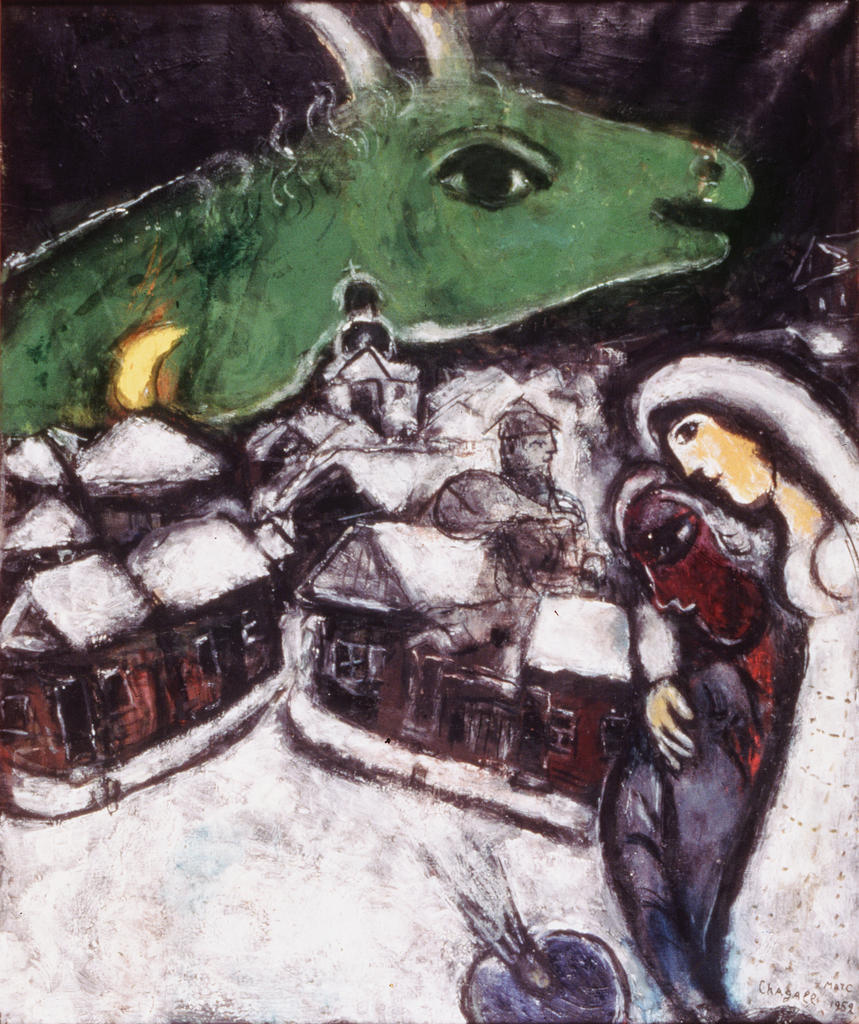
Top painting: Marc Chagall's The Green Night.

Wednesday, August 17, 2005

1952


Mighty Lata

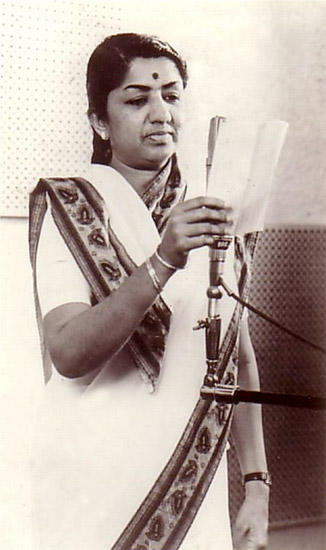
Lata Mangeshkar, Vande Matararam.

"Vande Mataram" (which translates roughly into "Hail, Mother" ) has existed, in some form, for about 125 years. An Indian equivalent to "La Marseillaise", a version was first composed by Bankimchandra Chatterjee in 1875 as a response to heightened British attempts to force "God Save the Queen" upon the Empire's Indian subjects as their national song. Included in Chatterjee's 1882 novel Anandmath, a recounting of an 18th Century Hindu rebellion, the song soon became entwined with the nascent Indian independence movement, sung by Rabindranath Tagore at the Indian National Congress of 1896, and soon banned by British authorities, who at times destroyed early recordings of the song.

From 1900 until 1950, the song, originally written in "Sanskritized" Bengali, roved throughout the subcontinent, its lyrics altering as it travelled in dozens of tongues, its tune radically changing as well--composers set "Vande Mataram" from everything to marches to Vedic chants and ragas. More than a hundred recordings were made.

One of the best is a full-force Bollywood rendition by Lata Mangeshkar. Mangeshkar,who may have recorded 40,000 songs in her career, made this track of "Vande Mataram" for a 1952 film version of Chatterjee's Anandmath, of which I know absolutely nothing. The song is a marvel, though, a fusion of pop and raga, in which Lata begins each of three verses with a different, spiralling melody; in the first two verses (the second verse is especially beautiful), she is cut off by a chanted mantra-like chorus, in the third, she gets to dance a bit longer.

(The chorus, which sticks in your head after a listen, actually saved my sanity once--I chanted it silently one afternoon upon being stuck on a crowded N train between stations for over an hour.) My copy is from a cassette a friend gave me years ago--I'm not sure where you can buy it on CD, but it apparently is on iTunes.

Suresh Chandvankar: "No other song in Independent India has received so much attention. This is probably because we Indians do not consider this as the national song or Anthem. We treat it as the song of our culture, a ‘Prateek’ or living symbol. In Hindu culture, the mother is considered a God, and worshipping the mother through songs is an age-old tradition...That is why the song keeps reappearing again and again in different forms. It will be no great wonder if it gets set to an assortment of new musical idioms - even jazz, rock, rap or metal - in the 21st century."

When a heavy metal version does appear, please let me know.

There is some controversy about whether "Vande Mataram" should be made an obligatory Indian national song.

Tuesday, August 16, 2005

1952


Slim Whitman, Bandera Waltz.

Our very lethargic stroll through '52 continues.

Otis Dewey “Slim” Whitman hailed from Tampa, Florida (he never was fond of his nickname, bestowed upon him by his record company). Born in 1924, Whitman was considered the last of the singing cowboys, noted for hits like "Indian Love Call" and "Secret Love." A purist of sorts, Whitman recorded mainly cowboy songs and ballads, never novelties or honky-tonk numbers.

Whitman, after getting married to a preacher’s daughter at age seventeen, worked as a meat packer until he severed two of his fingers. When the war began, Whitman joined the Navy, where he learned to play the guitar (left-handed, due to his maiming). After being decommissioned in 1946, he worked in a shipyard and played minor league baseball. At last, in 1948 he began playing music professionally and soon caught the eye of the infamous Col. Tom Parker, though Whitman still worked as a mailman part-time to support his family.

Whitman, oddly enough, became much more of a success in Europe and Australia than he ever did in the U.S. While a few of his hits in the early '50s crossed over into the U.S. pop charts as well as topping the country charts, he was mainly considered a minor-league country performer in the U.S., while in the UK, by contrast, he played the London Palladium, the first country singer to ever do so, and his songs dominated European radio throughout the decade.

"Bandera Waltz", marked by a glorious vocal by Whitman matched by Hoot Rains' soaring steel guitar, was recorded in Shreveport, Louisiana, in May 1952, with Curley Herndon (lead guitar), Curley Harris (b), Sonny Harville (p). Released as Imperial 8144 and can be found here.

Chords to Bandera.

Tuesday, August 09, 2005

1952


Howlin’ Wolf, Oh Red!
Howlin’ Wolf, Highway Man.


When I heard him, I said, ‘this is where the soul of man never dies ’…and I tell you the greatest show you could see today would be Chester Burnett doing one of those sessions in my studio. His eyes would light up and you’d see the veins on his neck, and buddy, there was nothing on his mind but that song. He sang with his damn soul.” Sam Phillips.

Chester Arthur Burnett, born in June 1910 in Clay County, Mississippi, was first called Bull Cow and Bigfoot due to his enormous frame, until his singing style earned him the name he’d keep until death – the Howlin’ Wolf. Taught on the guitar by Charley Patton and on the harmonica by his brother in law, Rice “Sonny Boy Williamson” Miller, Howlin’ Wolf began playing professionally in the late 1940s. By 1951, the Wolf had become a DJ and advertising man in addition to playing local Memphis clubs.

Sam Phillips began recording Wolf in 1951, passing on most of the sides to Chicago’s Chess records. By 1952, Wolf was signed exclusively to Chess, who leaned on him to move up to Chicago and leave Memphis behind. He did, but before going waxed some of his finest works in the small studio on Union Ave.

Here are two of the best. “Oh Red!” is pretty atypical, as it’s heavily arranged as early Wolf tracks go, and even features a wild tenor sax solo by Charles Taylor. It’s perhaps the closest Wolf ever came to Louis Jordan–inspired jump blues, and it swings. “Highway Man” is a more basic electric blues, featuring a genius raspy vocal by Wolf; the brilliant Willie Johnson provides some brutal, sharp guitar lines.

“Highway Man” was recorded on January 23, 1952 with LC Hubert on piano, Johnson (g), Willie Steel (d); “Oh Red!” was recorded on October 7, with Walter “Tang” Smith on trombone, Taylor on tenor sax, and possibly Bill Johnson on piano. Released as Chess 1528 and available here.

Tuesday, August 02, 2005

1952


Reno and Smiley, I’m Using My Bible For a Roadmap.

In the days before Southern religious fundamentalism became just another political interest group, it was capable of inspiring some beautiful, pure pieces of art.

The sublime “I'm Using My Bible For a Roadmap” was written by Don Reno, from Spartansburg, South Carolina, an excellent banjo player who performed with Fiddlin’ Arthur Smith on “Mocking Banjoes,” a track which inspired the infamous “Dueling Banjos” used in the film Deliverance. He also played with Bill Monroe as a brief replacement for Earl Scruggs, and then joined Red Smiley in 1949 to form a bluegrass band, the Tennessee Cut-Ups .

Smiley, who hailed from Asheville, North Carolina, was a fine complement to Reno, providing smooth continuous runs on his Martin guitar to balance Reno’s banjo picking, and harmonies for Reno’s tenor.

Recorded in Cincinnati on January 15, 1952, with Gopher Addis on fiddle, Chuck Haney on mandolin, Jay Haney on bass. Released as King 1045 and found here.

Thursday, July 28, 2005

1952


Thelonious Monk, Little Rootie Tootie.

There are more dramatic Monk recordings, those more influential, more disturbing, more historically significant. But I don’t think there are any more fun than this one. Ira Gitler called it “a sort of train song, with Monk even punctuating to represent the whistle.”

“Rootie Tootie” comes from a brief interval in Monk’s career, between the Blue Note recordings that established his name among musicians and the Riverside albums that did the same among listeners—in 1952 and 1954, Monk recorded a handful of excellent trio sessions, in which he debuted a number of compositions, including "Blue Monk" and "Bemsha Swing." Here he is joined by Gary Mapp on bass and one of his finest accompanists, the drummer Art Blakey.

Romp or no, "Rootie Tootie" is still Monk, so the piece's hook is three dissonant chords pounded out at the end of alternating bars, and Monk leads into the final chorus with a charming and silly rampage up and down the keyboard.

Recorded in New York City on October 15, 1952, along with “Sweet and Lovely”, "Bye-ya”, and "Monk’s Dream." Available on Thelonious Monk Trio, which collects the 1952 trio sessions as well as a solo Monk performance.